
Body · Measurement
Navy body-fat method explained

Key takeaways
- 3 measuresheight, neck, waist (women add hips)Hodgdon & Beckett, NHRC 1984
- ±3–4 ptstypical error of a single readingHodgdon & Beckett, NHRC 1984
- 14–24%healthy-to-fit range for men (women 21–31%)ACE category norms
- 90 / 80 cmwaist above which risk rises for men / women of Asian descent (94 / 80 cm if European)WHO expert consultation, 2008
DefinitionThe Navy method is a tape-measure formula from the US Naval Health Research Center that estimates body-fat percentage from height, neck and waist (plus hips for women).
Bathroom scales tell you weight, not what the weight is made of. For a desk worker starting to lift and eat better, the scale often barely moves while the waist shrinks and the shirt fits differently. The Navy method is the cheapest way to see that change, and it pairs naturally with the guide to choosing a fat-loss, muscle-gain or recomp goal. The Navy body-fat method is a set of equations that predict body density from neck, waist, hip and height measurements. Here is the formula, how to measure properly, how accurate it really is, and a calculator with metric and imperial units.
How do I calculate my body fat with a tape measure? (Navy calculator)
Estimate body fat from a tape measure
Example: male formula, 175 cm tall, 38 cm neck, 85 cm waist gives about 17% body fat (realistically 13–21%), which the ACE chart calls "fitness".
What is the US Navy body-fat formula?
In the 1980s the Naval Health Research Center compared tape measurements against underwater weighing (then the reference method) in several hundred sailors and fitted equations that predict body density from circumferences and height. The versions used today, in centimetres, are:
Men: body fat % = 495 ÷ (1.0324 − 0.19077 × log10(waist − neck) + 0.15456 × log10(height)) − 450
Women: body fat % = 495 ÷ (1.29579 − 0.35004 × log10(waist + hips − neck) + 0.22100 × log10(height)) − 450
The inch-based forms you see on US sites (86.010 × log10(waist − neck) − 70.041 × log10(height) + 36.76 for men) are the same equations with the units folded in. The logic is simple: a bigger waist relative to the neck means more fat; a bigger neck relative to the waist means more frame and muscle; height scales both.
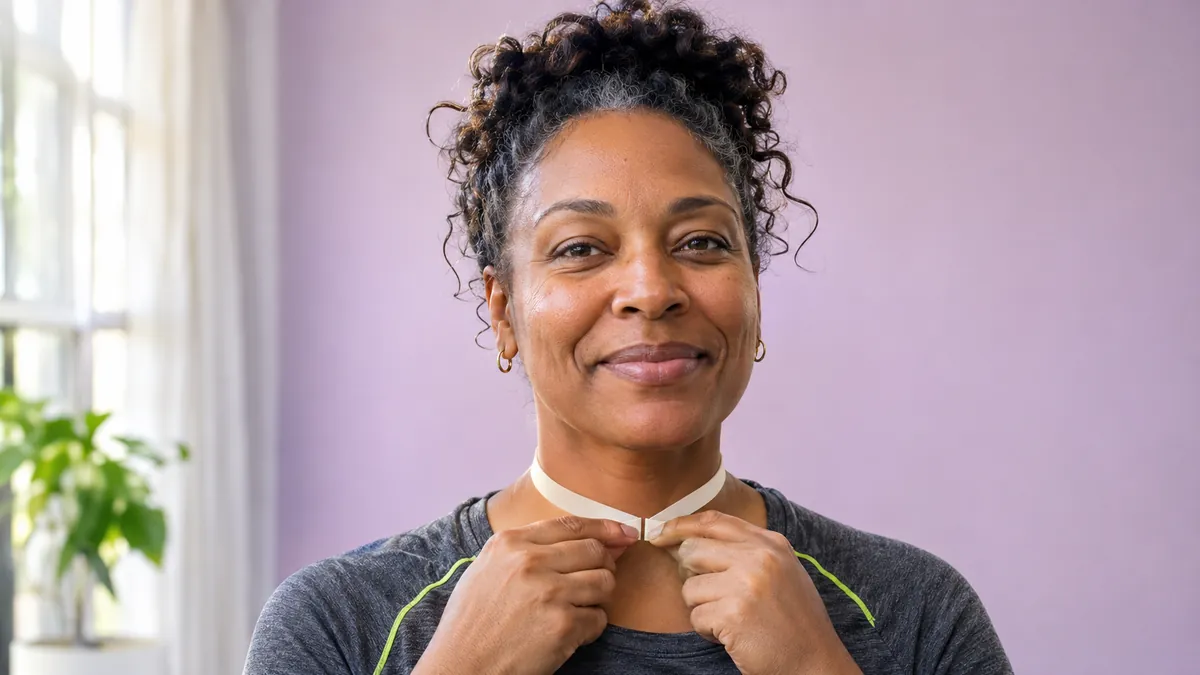
How do I measure body fat with the Navy method, step by step?
Placement is almost the whole error. Use a flexible tape, keep it level and snug but not digging in, and measure at the same time of day, ideally in the morning before eating.
- Prepare. Measure in the morning before eating, with a flexible tape. Keep it level and snug, not digging in.
- Measure height. No shoes, heels together, looking straight ahead.
- Measure your neck. Just below the larynx (Adam's apple), tape sloping slightly downward to the front. Do not flare the neck or tuck the chin.
- Measure your waist. Men: at the navel, horizontal, at the end of a normal exhale; do not suck in. Women: at the narrowest point of the torso, usually just above the navel.
- Measure hips (women only). Around the widest part of the buttocks, feet together, tape horizontal.
- Repeat and calculate. Take each measurement twice and use the average, then enter the numbers in the calculator above. Re-measure every 2–4 weeks and follow the trend.
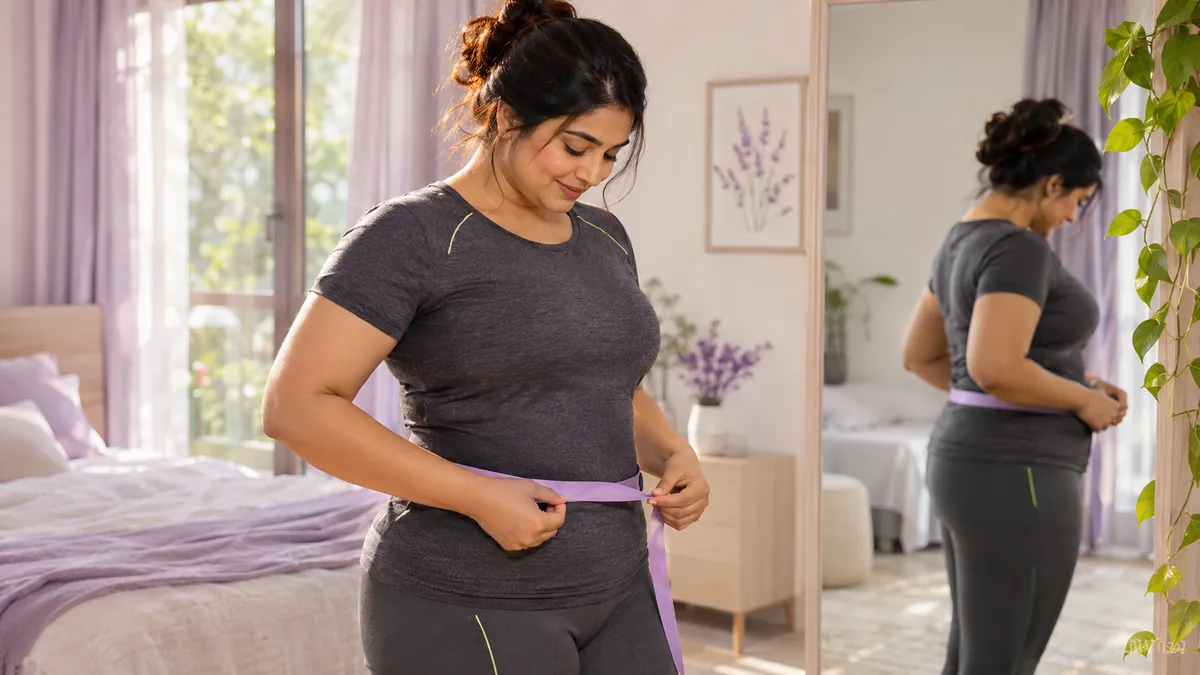
How accurate is the Navy method?
Against reference methods like DEXA or four-compartment models, the Navy equations have a standard error of roughly 3–4 percentage points. In plain terms: if the formula says 20%, your true value is probably somewhere between 16% and 24%, and occasionally further out. It tends to under-read in people with a lot of visceral fat and over-read in very muscular people with thick waists.
That sounds bad until you compare it with the alternatives. Bioimpedance bathroom scales swing several points with hydration alone. Calipers in untrained hands are worse. DEXA is better but costs money and still varies by machine. The Navy method's real strength is consistency: the same person, same tape, same placement, the error is mostly constant, so the change over months is meaningful even if the absolute number is a bit off.
What is the ideal body fat percentage for men and women?
A healthy body-fat percentage is about 14–24% for adult men and 21–31% for adult women on the American Council on Exercise (ACE) scale; "fitness" levels are 14–17% for men and 21–24% for women.
| ACE category | Women | Men |
|---|---|---|
| Essential fat | 10–13% | 2–5% |
| Athletes | 14–20% | 6–13% |
| Fitness | 21–24% | 14–17% |
| Average / acceptable | 25–31% | 18–24% |
| Obese | 32%+ | 25%+ |
Women carry more essential fat for hormonal reasons, so the same percentage means something different in men and women. For most desk workers, moving from "obese" to "average" or from "average" to "fitness" is a realistic 6–12-month goal and comes with the biggest health gains.
If you are of Asian descent (South Asian most of all), health risk starts at lower body fat and smaller waists than the charts above assume, because more fat is stored around the organs. Waist cut-offs differ by ethnic group: 94 cm for men and 80 cm for women of European descent, but 90 cm for Asian men and 80 cm for Asian women. If that applies to you, treat the "average" band as an upper limit rather than a comfortable middle, and watch the waist number itself. Our body goals guide lists the BMI and waist cut-offs by ethnic group.

How should I use my body-fat number to lose fat?
- Measure every 2–4 weeks, same conditions, and record waist, neck and weight.
- Watch the rolling average, not the latest reading. A 1-point change between two readings is noise; a 3-point change over three months is real.
- Pair it with how your clothes fit, your gym lifts and a couple of photos. If waist is falling while your lifts hold or rise, you are losing fat and keeping muscle, whatever the scale says.
- If weight is flat but waist is dropping, that is body recomposition. It is common in people new to lifting and eating enough protein per kg of bodyweight.
To move the number, set a moderate deficit with the TDEE and calorie calculator, train with weights at least three times a week (the beginner 3-day full-body split is a simple start, with lifts like the goblet squat and push-up), and keep steps up if you sit all day, as covered in fitness habits for desk workers.
The bottom line
Measure height, neck and waist (plus hips for women) in the morning with a flexible tape, take each twice, and use the calculator. Expect an error of about 3–4 points on a single reading, so track the trend every 2–4 weeks rather than one number. Healthy ranges are about 14–24% for men and 21–31% for women, and lower for people of Asian descent at the same waist.
Frequently asked questions
Is the Navy body-fat method accurate?
It is accurate enough to track change: typical error is about 3–4 percentage points against reference methods, mostly from tape placement. Measure the same way each time and judge the trend of several readings rather than one number.
Where exactly do I measure my waist for the Navy method?
Men measure at the navel; women at the narrowest point of the torso. Keep the tape level, snug but not compressing, and measure at the end of a normal exhale without sucking in.
Why does the women's formula include hips?
Women store relatively more fat around the hips and thighs, so a hip measurement improves the prediction. The men's equation was fitted without it because it added little accuracy in men.
Is the Navy method better than a smart scale?
For tracking, usually yes. Bioimpedance scales can swing several points with hydration, a meal or a workout. The tape has its own error, but it is repeatable, free and does not depend on how much water you drank.
What body-fat percentage should I aim for?
For general health most men do well between about 14% and 24% and most women between about 21% and 31%, using the ACE bands. Lower is not automatically better; very low body fat affects hormones, sleep and energy.
How often should I measure body fat?
Every two to four weeks is plenty. Daily measurements only add noise. Fitrang averages your last three readings and shows the trend so a single odd measurement does not mislead you.
Keep reading
 How much protein do I need?Keep muscle while the waist comes down
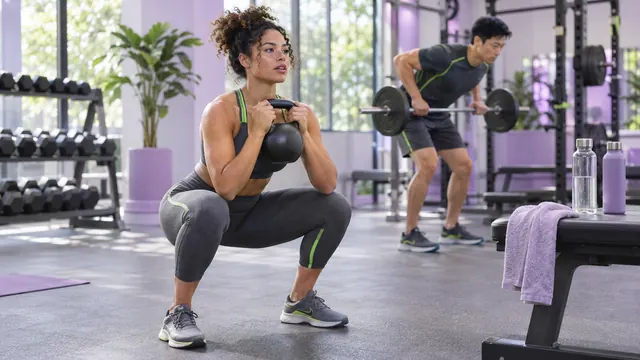 Beginner 3-day workout splitThree sessions a week that change the numbers
 Fitness habits for people who sit all dayWhere waist size comes from for desk workers
 Fat loss, muscle gain or recomp?Turn your body-fat number into a goal
 How many calories should I eat?Set the deficit that moves the number
Sources
- Hodgdon JA, Beckett MB. Prediction of percent body fat for U.S. Navy men from body circumferences and height. Naval Health Research Center, Report No. 84-11, 1984.
- Hodgdon JA, Beckett MB. Prediction of percent body fat for U.S. Navy women from body circumferences and height. Naval Health Research Center, Report No. 84-29, 1984.
- American Council on Exercise. Percent body fat calculator and category norms. acefitness.org
- World Health Organization. Waist circumference and waist–hip ratio: report of a WHO expert consultation (2008). who.int
- National Heart, Lung, and Blood Institute (NIH). Assessing your weight and health risk (BMI and waist circumference). nhlbi.nih.gov
This article is general information for healthy adults, not medical advice. If you have a medical condition, are pregnant, or take medication, talk to a doctor or registered dietitian before changing your diet, sleep or training.