
Life stages · Plan
Exercise over 60: balance and strength plan
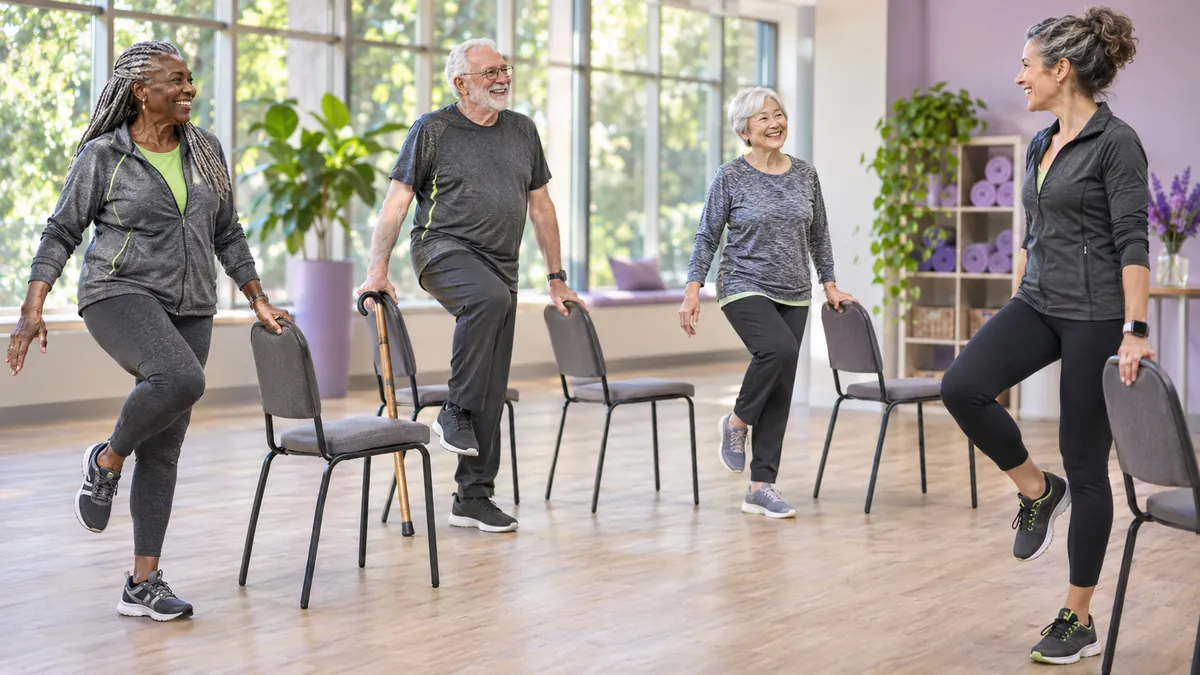
Key takeaways
- 3+ daysa week of balance and strength activity for adults 65 and overWHO guidelines, 2020
- −23%fewer falls in older people who exercised (high-certainty evidence)Cochrane review, 2019
- −34%fewer falls with programs combining balance, functional and resistance exerciseCochrane review, 2019
- 71%of fall deaths worldwide happen in people aged 60 and overWHO falls fact sheet (2023 data)
DefinitionMulticomponent physical activity combines aerobic, strength and balance training in one program, as the WHO recommends for older adults.
Staying strong and steady after 60 is less about fitness for its own sake and more about keeping the life you want: carrying shopping, playing with grandchildren, travelling, getting up from the floor. This guide covers how much to do, the balance and strength exercises with the best evidence, a sample week, protein, and when to see a doctor first.
How much exercise do people over 60 need?
For adults 65 and over, the WHO recommends 150–300 minutes of moderate aerobic activity a week (or 75–150 vigorous), muscle-strengthening activity on two or more days, and varied multicomponent activity that emphasises balance and strength on three or more days. People aged 60–64 follow the adult guidelines, though balance work helps them too.
If you cannot reach these amounts because of a health condition, the WHO's advice is to be as active as your abilities allow. Any movement beats none, and benefits start with small amounts. Breaking up long periods of sitting, for example by standing and walking around every half hour, also helps.
Can exercise really prevent falls?
Yes, and the evidence is strong. A 2019 Cochrane review of 108 trials with more than 23,000 people found that exercise reduced the rate of falls by 23%. Balance and functional exercises cut falls by 24%, and programs that combined them with resistance training cut falls by about 34%. Tai chi may also help.
Falls matter because they are a leading cause of injury and lost independence later in life. The WHO estimates about 842,000 people died from falls worldwide in 2023, 71% of them aged 60 or over, and names exercise that challenges balance as one of the most effective ways to prevent them. The 2022 World Falls Guidelines also recommend balance, functional and strength exercise for older adults.
What are the best balance exercises for older adults?
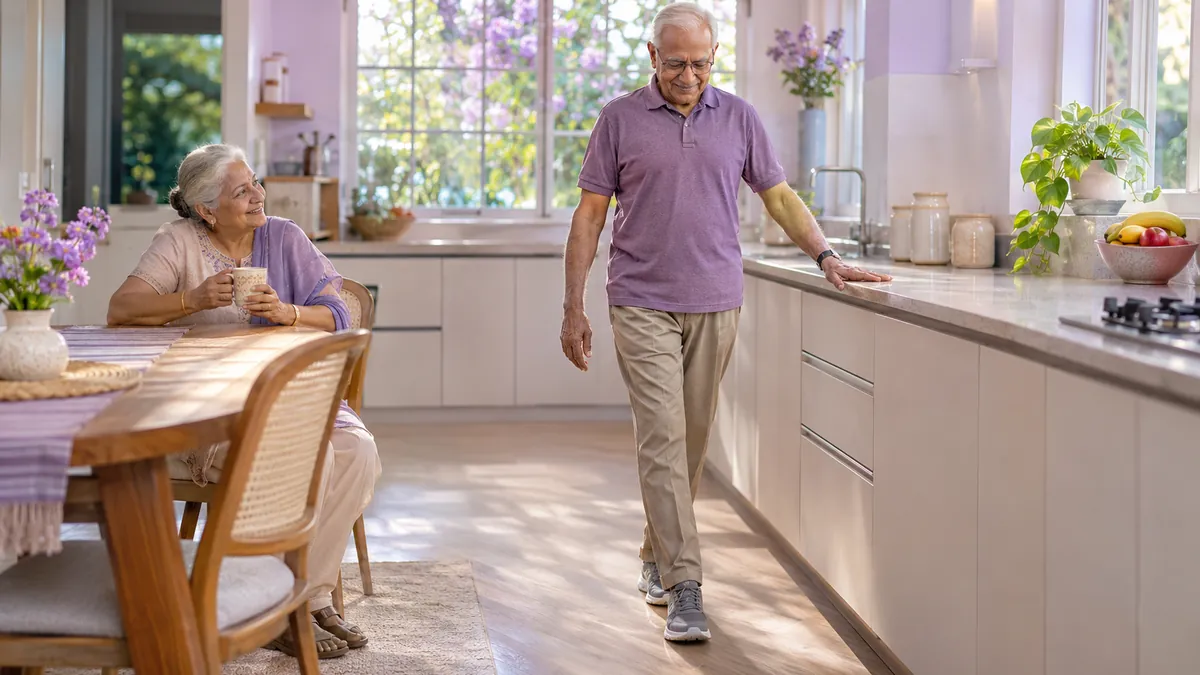
The best ones gently challenge you to stay steady while standing or moving: standing on one leg, walking heel to toe, stepping sideways, rising from a chair without using your hands, and slow, controlled movements such as tai chi. Do them near a kitchen counter or sturdy chair, and progress slowly as they get easier.
- Single-leg stand: hold the counter, lift one foot, stand for 10–30 seconds. Progress to one fingertip, then no hands.
- Heel-to-toe walk: walk 10–20 steps along a hallway, heel touching toe, a hand near the wall.
- Side steps: 10 slow steps each way along the counter, toes forward.
- Sit to stand: rise from a firm chair 5–10 times, using your hands only if needed.
- Tandem stand: one foot directly in front of the other, hold for 10–30 seconds, then swap.
- Tai chi or a balance class: group classes add guidance and company.
Balance work should feel a little challenging but never unsafe. Always keep support within reach, wear supportive shoes, and clear the floor of rugs and clutter first.
Which strength exercises are safest after 60?
Simple, controlled movements that copy daily life: sit-to-stands, step-ups, wall or bench push-ups, rows with a band or machine, glute bridges, calf raises and carrying weights. The NSCA's position statement says well-designed resistance training is safe and effective for older adults, including those who are frail, when it progresses gradually.
| Exercise | Sets × reps | Easier option |
|---|---|---|
| Sit to stand / box squat | 2 × 8–12 | Higher chair, use hands |
| Incline push-up | 2 × 8–12 | Hands on a wall |
| Band row or seated row | 2 × 10–12 | Lighter band |
| Step-up | 2 × 8 each leg | Lower step, hold a rail |
| Glute bridge | 2 × 10–15 | Smaller range |
| Calf raise | 2 × 10–15 | Hold the counter |
| Farmer's carry | 2 × 20 m | Lighter weights or shopping bags |
Start with a weight you could lift about 15 times, do 10–12 slow reps, and breathe out as you push. When two sets of 12 feel easy, add a little weight or a harder version. Once the moves are solid, the NSCA statement supports lifting at a brisk, controlled speed to build power, which helps you catch yourself when you trip.
How three of the moves look
What does a sample week look like?
Spread the work so you do something on most days: two strength sessions, balance practice on at least three days, and walking or another moderate activity adding up to 150 minutes or more. The example below meets every part of the WHO guidance for people 65 and over, in sessions of 20–45 minutes.
| Day | Session | Time |
|---|---|---|
| Mon | Strength circuit + 5 min balance | 35 min |
| Tue | Brisk walk | 30 min |
| Wed | Balance routine or tai chi class | 20–45 min |
| Thu | Strength circuit + 5 min balance | 35 min |
| Fri | Brisk walk, swim or cycle | 30–45 min |
| Sat | Active outing: gardening, dancing, a walk with family | 30–60 min |
| Sun | Rest or a gentle stroll | — |
New to exercise? Halve every time in the first two weeks and add a few minutes each week. The aim over two or three months is the full week above.
How much protein do you need after 60?
The PROT-AGE expert group recommends 1.0–1.2 g of protein per kg of body weight a day for healthy adults over 65, at least 1.2 g/kg for those who exercise, and 1.2–1.5 g/kg for many with acute or chronic illness. Aim for about 25–30 g at each main meal, since appetite often shrinks with age.
Eggs, milk, yogurt, cheese, fish, chicken, beans, lentils and tofu are easy ways to reach it. People with severe kidney disease may need less protein, so ask your doctor. Calcium and vitamin D matter for bones too; our strength training over 50 guide has a protein calculator and the bone-nutrient amounts.
Do you need medical clearance before exercising after 60?
Not always. Under American College of Sports Medicine screening guidance, healthy people without symptoms can usually start light-to-moderate exercise and build up slowly. If you are inactive and have heart, kidney or metabolic disease, or symptoms such as chest pain, breathlessness or dizziness, get medical clearance first. Falls and unsteadiness also deserve a doctor's review.
A doctor or physiotherapist can check your balance, review medicines that may cause dizziness, test your eyesight, and tailor exercises around arthritis, joint replacements, osteoporosis or a past stroke. Many areas run falls-prevention programs; ask your doctor whether one is available near you.
How can you make home exercise safer?
Exercise next to something sturdy to hold, such as a kitchen counter or a heavy chair against a wall. Clear rugs, cables and clutter from the floor, wear supportive shoes rather than socks or slippers, keep water and a phone nearby, and work out in good light. The WHO lists reducing home hazards alongside balance exercise for preventing falls.
How do I follow a plan in Fitrang?
Build the strength circuit and a balance routine as routines from Fitrang's library of 460+ exercises with animated demos, or start the Machine Starter or Home Bodyweight program and set your days. Fitrang shows last time's weights so progress stays gradual, logs walks, and prints a doctor report for check-ups.
- Create a "Strength" and a "Balance" routine in Train, or pick a program.
- Log each set and session; the rest timer runs between sets.
- Log walks and other activity, and track protein in Diet.
- Before a check-up, print the 30- or 90-day doctor report from You.
The bottom line
After 60, aim for 150–300 minutes of moderate activity a week, strength work on two days, and balance practice on three or more days. Combining balance and strength exercise prevented about a third of falls in trials. Start gently near support, progress slowly, eat 1.0–1.2 g/kg of protein (more if active), and see a doctor first about heart symptoms, dizziness, recent falls or osteoporosis.
Frequently asked questions
How much exercise should a 70-year-old get?
The WHO recommends 150–300 minutes of moderate activity a week, muscle-strengthening on two or more days, and balance-and-strength activity on three or more days for adults 65 and over. If health conditions limit you, be as active as your abilities allow.
What are the best exercises for seniors?
A mix of walking or other moderate activity, simple strength moves such as sit-to-stands, step-ups, wall push-ups and band rows, and balance exercises such as single-leg stands, heel-to-toe walking and tai chi. Programs that combine balance and strength prevent the most falls.
Can balance be improved in old age?
Yes. Balance responds to practice at any age. In a Cochrane review, balance and functional exercises reduced the rate of falls in older people by 24%. Practise near support on three or more days a week and progress slowly.
Is walking enough exercise after 60?
Walking is excellent for the heart, but on its own it does not build much strength or balance, and the Cochrane review could not confirm that walking programs alone prevent falls. Add strength exercise on two days and balance work on three.
Should I see a doctor before starting exercise at 65?
If you are healthy with no symptoms, you can usually start light exercise and build up. See a doctor first if you have heart, lung, kidney or metabolic disease, chest pain, dizziness, recent falls, osteoporosis, or recent surgery.
Keep reading
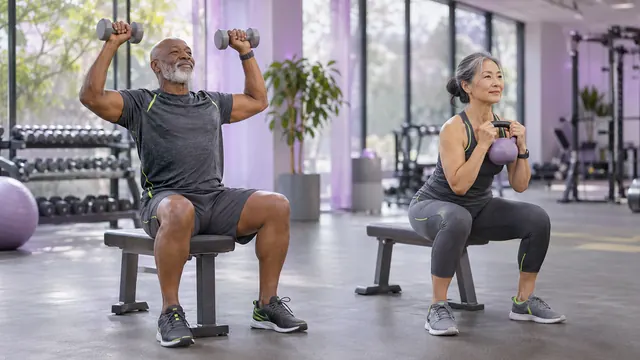 Strength training over 50Plan, protein and safety
 How much protein do I need?Grams per kg by goal, with a calculator
 Vitamin D deficiencySigns, tests and food sources
 Home workout with no equipmentBody-weight moves for any room
Sources
- World Health Organization. WHO guidelines on physical activity and sedentary behaviour (2020). who.int
- Sherrington C, Fairhall NJ, Wallbank GK et al. Exercise for preventing falls in older people living in the community. Cochrane Database of Systematic Reviews 2019;1:CD012424. PubMed
- World Health Organization. Falls: fact sheet. who.int
- Montero-Odasso M, van der Velde N, Martin FC et al. World guidelines for falls prevention and management for older adults: a global initiative. Age and Ageing 2022;51(9):afac205. PubMed
- Fragala MS, Cadore EL, Dorgo S et al. Resistance training for older adults: position statement from the National Strength and Conditioning Association. Journal of Strength and Conditioning Research 2019;33(8):2019–2052. PubMed
- Bauer J, Biolo G, Cederholm T et al. Evidence-based recommendations for optimal dietary protein intake in older people: a position paper from the PROT-AGE Study Group. Journal of the American Medical Directors Association 2013;14(8):542–559. PubMed
- Riebe D, Franklin BA, Thompson PD et al. Updating ACSM's recommendations for exercise preparticipation health screening. Medicine and Science in Sports and Exercise 2015;47(11):2473–2479. PubMed
This article is general information for healthy adults, not medical advice. If you have a medical condition, are pregnant, or take medication, talk to a doctor or registered dietitian before changing your diet, sleep or training.