Nutrition · Micronutrients
Vitamins and minerals: what you actually need, and the gaps most diets have

Key takeaways
- ~30%of women aged 15–49 worldwide are anaemicWHO global estimates, 2019
- ~1 in 2people worldwide have vitamin D below 50 nmol/LCui et al., global review 2000–2022
- 10–30%of older adults absorb B12 from food poorlyNIH Office of Dietary Supplements
- < 500 mgaverage daily calcium in much of Asia, half the 1,000 mg targetBalk et al., Osteoporosis Int.
- 2.4 µgvitamin B12 a day recommended for adultsUS National Academies (NIH ODS)
DefinitionMicronutrients are the vitamins and minerals your body needs in milligram or microgram amounts to run nerves, blood, bones and the immune system; unlike macros they supply no calories.
Simple fixes cover most of it: dairy, eggs or fortified foods for B12, beans and greens with a squeeze of lemon for iron, yogurt, cheese, calcium-set tofu and sesame for calcium, and iodised salt for iodine. Calories, how much protein you need and your macro split get all the attention, but vitamins and minerals decide whether you feel tired in the afternoon, how well you recover, whether your hair falls out, and how your bones look at 60.
This guide explains the three numbers behind every nutrient (what you need, the recommended amount and the safe max), goes through the nine gaps that come up most often around the world, and ends with a quick checker that tells you which ones are likely for you.
What do EAR, RDA and the safe upper limit actually mean?
Every vitamin and mineral has up to three reference numbers. This article uses the US and Canadian values set by the National Academies (the Dietary Reference Intakes, summarised in the NIH fact sheets) unless noted. Europe's EFSA uses different names (Average Requirement, Population Reference Intake) and now and then a different number, but the ideas are the same.
- What you need (EAR, Estimated Average Requirement). The amount that covers the needs of half of healthy people. If you regularly eat well below this, you are probably short.
- The recommended amount (RDA, Recommended Dietary Allowance). Set higher than the EAR so that it covers almost everyone (about 97 in 100 people). It is a safe target, not a minimum.
- The safe max (UL, Tolerable Upper Intake Level). The most you can take every day without a likely risk of harm. Going over it once is not dangerous; living above it, usually through supplements, can be.
Where the three numbers sit
Fitrang's Nutrients screen uses the same three ideas in plain words. A whole day under half of what you need reads Deficient, 50–99% reads Below range, covered reads On target, from 80% of a safe max reads Above range, and over it reads Over safe limit. The app's reference table takes the stricter of the ICMR-NIN, US and WHO values for each nutrient, so a few of its targets (iron, zinc and magnesium) are higher than the US figures below.
Why are so many vegetarians, vegans and older adults low in vitamin B12?
Vitamin B12 deficiency is common in vegetarians and vegans because usable B12 comes almost only from animal foods. B12 is made by bacteria and reaches us through milk, yogurt, cheese, eggs, fish and meat, or through fortified foods. Plants do not contain usable B12. A review of studies worldwide found deficiency is common in vegetarians and higher still in vegans. Age matters too: the NIH estimates that 10–30% of older adults have low stomach acid and absorb the B12 in food poorly, which is why over-50s are advised to get some from fortified foods or a supplement.
B12 keeps nerves and red blood cells healthy. Shortage shows up slowly as tiredness, breathlessness, pins and needles, poor memory or low mood, and long-term deficiency can damage nerves for good.
- Need: 2.0 µg a day is what you need; 2.4 µg is the US recommended amount (EFSA sets 4 µg as an adequate intake). No safe max is set.
- Vegetarian sources: a 250 ml glass of milk gives about 1.1 µg, a 170 g pot of yogurt about 1 µg, 30 g of cheese about 0.3 µg, and fortified cereals or plant milks often 0.5–1 µg a serving. Two glasses of milk plus a yogurt reaches the basic need on paper, but many people eat less.
- Egg, fish and meat sources: one egg about 0.5 µg (it is in the yolk), a 100 g serving of salmon or tuna about 3 µg, and clams or beef liver far more than a week's worth.
If you eat no dairy or eggs, food alone will not get you there; fortified foods or a supplement are the realistic route. That is a conversation for your doctor, ideally after a blood test.
Why is vitamin D deficiency so common, even in sunny countries?
Your skin makes vitamin D from UVB sunlight, but only when enough bare skin meets strong sun. Office jobs, long winters far from the equator, covering clothing, sunscreen, air pollution, older age and darker skin (which needs longer exposure) all cut production. A global review of studies from 2000 to 2022 found almost half of people below 50 nmol/L and about one in six below 30 nmol/L, the level usually called deficient.
- Need: the US recommended amount is 15 µg (600 IU) a day, and 20 µg (800 IU) over 70; EFSA's figure is also 15 µg. The safe max is 100 µg (4,000 IU).
- Sun: roughly 15–30 minutes of arms and face in the late-morning to early-afternoon sun, a few times a week, helps when the sun is high enough; darker skin needs the longer end. In winter at high latitudes the sun is too low to help much. Do not burn.
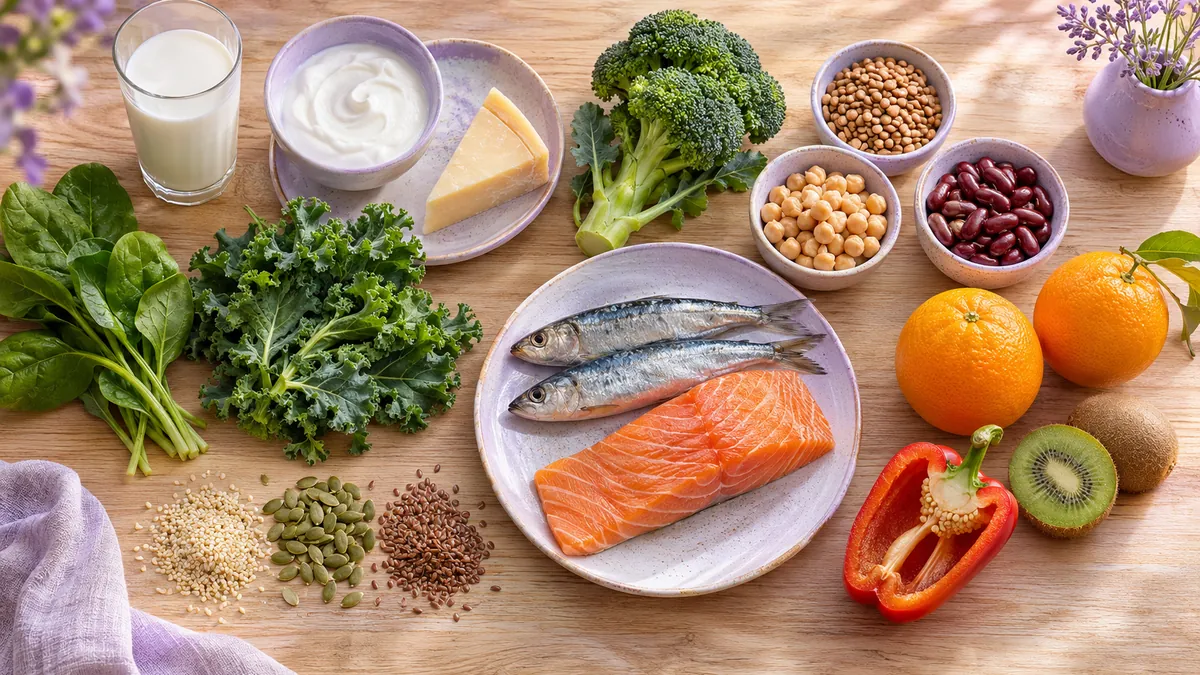
- Food: few foods have much. Oily fish like salmon or trout (often 10 µg or more per serving), sardines (about 3–5 µg per 100 g), egg yolks (about 1 µg per egg), and fortified milk, plant milks or cereals (around 2–3 µg a glass or bowl, where your country fortifies them).

How much iron do women need, and why so much more than men?
Monthly blood loss. The US recommended amount is 18 mg a day for women of 19–50 and 8 mg for men (what you need: 8.1 mg and 6 mg). After menopause a woman's need falls to the men's figure. Plant iron is absorbed poorly, so the NIH advises vegetarians to aim for about 1.8 times these amounts. The WHO estimates that about 30% of women aged 15–49 worldwide are anaemic, and iron shortage is the leading cause.
- Plant iron: 100 g of cooked lentils gives about 3.3 mg, the same of black beans or kidney beans about 2–3 mg; half a cup of firm tofu about 3 mg; a 28 g handful of pumpkin seeds about 2.5 mg; a bowl of fortified breakfast cereal often 4–18 mg; plus quinoa, oats, kale and spinach.
- Animal iron (better absorbed): beef about 2.5–3 mg per 100 g, chicken liver about 9 mg, oysters and clams even more, and about 0.9 mg per egg.
- Spinach is not the iron hero it is made out to be. It has about 2.7 mg per 100 g raw, but oxalates lock up much of it. Eat it for folate and fibre, not as your main iron source.
How do I increase iron absorption from vegetarian food?
How you combine food matters almost as much as what you eat.
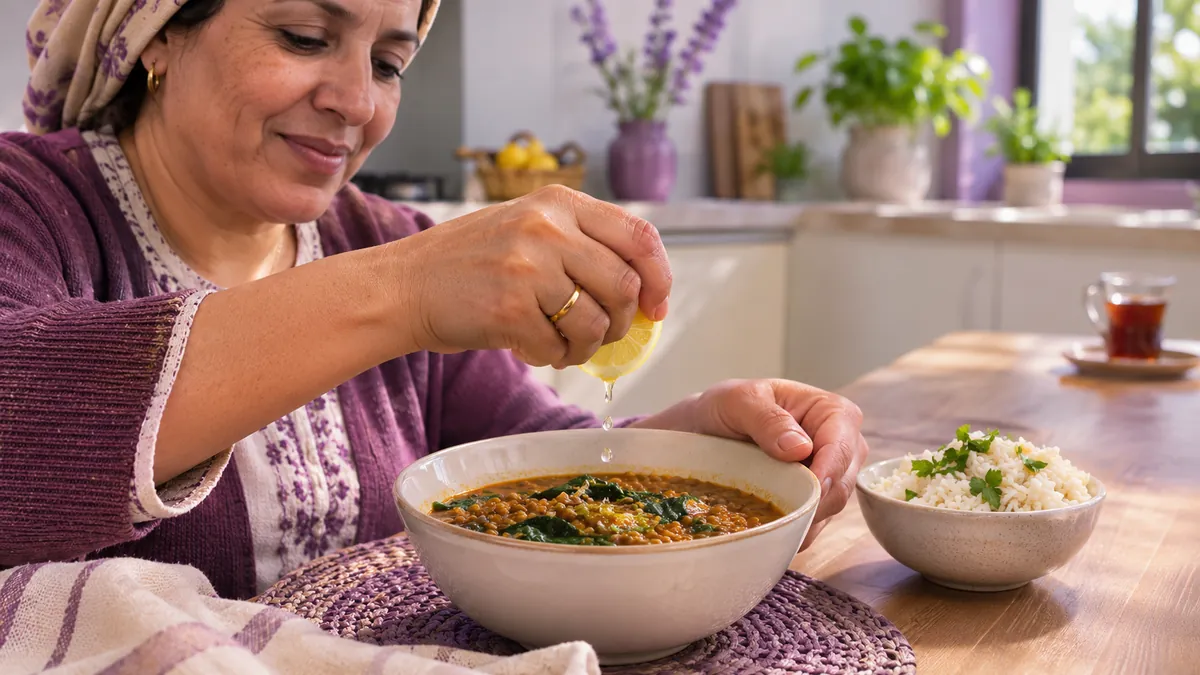
- Add vitamin C to the same meal. A squeeze of lemon on lentils, an orange or kiwi with lunch, tomato and red pepper in the stew. Vitamin C can multiply plant-iron absorption several times over.
- Keep tea and coffee away from meals. Tannins and polyphenols in tea and coffee cut iron absorption sharply when drunk with food. Leave about an hour between them and an iron-rich meal. A cup of tea with your bean lunch is the classic iron blocker.
- Soak, sprout and ferment. Phytates in grains and pulses lock up iron and zinc. Soaking beans, sprouting lentils, and sourdough or other fermented foods release more of both.
- Do not take calcium with iron. If you are prescribed both, take them at different times of day.
How much calcium do I need per day without much milk?
Adults need about 1,000 mg of calcium a day. The US recommended amount is 1,000 mg a day (what you need: 800 mg) for adults up to 50, rising to 1,200 mg for women over 50 and everyone over 70. A global review found average intakes across much of Asia under 500 mg, and only a handful of countries, mostly in northern Europe, near 1,000 mg. If you skip dairy, you are likely well short.
- Dairy: 250 ml of milk about 300 mg, a 170 g pot of plain yogurt about 300 mg (strained Greek yogurt has less), 30 g of cheddar about 200 mg.
- Without dairy: calcium-set tofu (about 250 mg in half a cup), fortified soy milk (about 300 mg a glass), canned sardines or salmon eaten with their bones, sesame (a tablespoon about 90 mg; tahini counts), kale, collard greens and bok choy, and almonds.
Calcium works with vitamin D (which absorbs it), protein and strength training (which load the bone). The safe max is 2,500 mg up to 50 and 2,000 mg after; it is very hard to reach from food, but easy to approach if you stack supplements on a dairy-rich diet.
Who needs to watch folate?
Folate builds new cells, so needs rise sharply for anyone who could become pregnant: it protects against neural-tube defects in the first weeks, often before a pregnancy is known. The US recommended amount is 400 µg a day for adults, and the WHO advises 400 µg of folic acid daily for women planning pregnancy. Many countries, including the US, Canada and Australia, add folic acid to flour or bread for this reason.
Good news: food is folate-rich when it includes pulses and greens. 100 g of cooked lentils gives about 180 µg, cooked chickpeas about 170 µg, and spinach about 190 µg per 100 g raw; broccoli, asparagus and oranges add more. Folate is fragile in heat, so do not overcook greens. The 1,000 µg safe max applies only to folic acid from supplements and fortified foods, not to food folate.
Do I still need to think about iodine?
Usually not, as long as you use iodised salt. Iodine runs the thyroid, and salt iodisation turned goitre from common to rare in much of the world; UNICEF estimates close to nine in ten households worldwide now use iodised salt. Adults need 150 µg a day (US and WHO), and more in pregnancy. The safe max is 1,100 µg.
What about zinc and magnesium?
Zinc helps healing, immunity, skin and hair. The US recommended amount is 11 mg for men and 8 mg for women, and the NIH notes vegetarians may need up to 50% more, because grain-and-bean diets are rich in phytates that block zinc. Meat and seafood are the easiest sources (beef about 4–5 mg per 100 g, oysters far more). Vegetarians should lean on pumpkin seeds (about 2.2 mg per 28 g), cashews, sesame, oats, chickpeas, cheese, and the same soak-sprout-ferment tricks used for iron. Safe max: 40 mg.
Magnesium supports muscles, nerves, sleep and blood sugar. Targets are 400–420 mg for men and 310–320 mg for women. White bread, white rice and refined flour lose most of it; whole grains keep it. A handful of almonds (about 80 mg), pumpkin seeds (about 155 mg per 28 g), black beans, brown rice, oats and spinach all help. The 350 mg safe max applies only to magnesium from supplements, which can cause diarrhoea; food magnesium has no practical limit.
Do vegetarians get enough omega-3?
Omega-3 fats come in two kinds. ALA is in plants: flaxseed, walnuts, chia, soybeans and canola (rapeseed) oil. EPA and DHA, the forms linked most strongly to heart and brain health, come mainly from oily fish such as salmon, mackerel, herring and sardines. The body converts only a small share of ALA into EPA and DHA.
The US sets an adequate intake only for ALA (1.6 g for men, 1.1 g for women). For EPA plus DHA, EFSA and FAO/WHO suggest about 250 mg a day for adults, which is one or two servings of oily fish a week. Vegetarians should eat ALA daily (a tablespoon of ground flaxseed, a few walnuts, canola oil in cooking) and can ask a doctor about algae-based DHA if they want more.
Which gaps am I most likely to have?
Answer six quick questions. The checker uses the patterns above to rank your likely gaps and suggests foods that fit your diet. It is a guide to what to look at first, not a diagnosis.
Your likely gaps
Example for a vegetarian woman under 50 who rarely gets midday sun and eats dairy some days: likely gaps are vitamin D and iron; worth watching are vitamin B12, calcium, zinc, omega-3 and folate.
What are the daily values for vitamins and minerals?
| Nutrient | What you need (EAR) | Recommended (RDA) | Safe max (UL) | Best foods |
|---|---|---|---|---|
| Vitamin B12 | 2.0 µg | 2.4 µg | none set | Milk, yogurt, cheese, eggs, fish, fortified foods |
| Vitamin D | 10 µg | 15 µg (600 IU) | 100 µg | Midday sun, oily fish, egg yolk, fortified milk |
| Iron | 6 / 8.1 mg | 8 / 18 mg | 45 mg | Lentils, beans, tofu, fortified cereal, red meat |
| Calcium | 800 mg | 1,000 mg | 2,500 mg | Milk, yogurt, cheese, calcium-set tofu, sardines |
| Folate | 320 µg | 400 µg | 1,000 µg* | Lentils, chickpeas, spinach, broccoli, liver |
| Iodine | 95 µg | 150 µg | 1,100 µg | Iodised salt, dairy, eggs, seafood |
| Zinc | 9.4 / 6.8 mg | 11 / 8 mg | 40 mg | Oysters, beef, pumpkin seeds, cashews, oats |
| Magnesium | 330–350 / 255–265 mg | 400–420 / 310–320 mg | 350 mg* | Nuts, seeds, beans, whole grains, spinach |
| Omega-3 (EPA+DHA) | – | ≈ 250 mg | – | Salmon, mackerel, sardines; ALA: flax, walnuts |
Should I take vitamin supplements, and when should I get tested?
Food first is not a slogan; it is how the body is built to get these nutrients, alongside fibre and protein that pills do not bring. But testing makes sense when:
- you are vegetarian or vegan and have never checked B12;
- you are tired, breathless, pale, losing hair, or have pins and needles;
- you are a woman with heavy periods, or planning a pregnancy;
- you rarely get sun, or have bone or joint pain;
- you are over 50, on metformin or acid-reducing tablets (both lower B12 absorption).
Supplements also do not undo a poor plate, despite what popular diet myths suggest. A doctor can order a complete blood count, ferritin, B12 and vitamin D, and set a dose and duration if something is low. Self-dosing with high-strength iron, vitamin D or vitamin A is how people end up Over safe limit. And more is not better: once a level is normal, extra pills add nothing.
How do I know if my diet is covering these?
Log what you eat for a couple of weeks and look at the averages, not single days. One day low in iron means nothing; thirty days at half of what you need is a pattern. Fitrang's Nutrients list does exactly this: every vitamin and mineral it tracks, worst first, with 30 daily bars, so a steady gap stands out. Tap one and it shows the foods that would close it, sized for your diet.
The bottom line
Most diets fall short on vitamin B12 (vegetarians, vegans and over-50s), vitamin D, iron (women) and calcium. Cover them with dairy, eggs or fortified foods, beans and greens with lemon (and tea away from meals), yogurt, cheese or calcium-set tofu, and iodised salt. Vitamin D and B12 often need a test and a doctor-advised supplement; take high doses only on prescription.
Frequently asked questions
Which vitamin deficiency is most common worldwide?
Vitamin D and iron are the most widespread: a global review found almost half of people below 50 nmol/L of vitamin D, and the WHO estimates about 30% of women aged 15 to 49 are anaemic, mostly from iron shortage. Vitamin B12 is common in vegetarians, vegans and over-50s, and calcium intake is low for many adults who eat little dairy.
Can vegetarians get enough vitamin B12 from food?
Vegetarians who eat dairy and eggs can, on paper: two glasses of milk plus a pot of yogurt come close to the 2 µg a day you need. In practice many eat less dairy than that, so low B12 is common. Vegans need fortified foods or a supplement. A blood test tells you where you stand.
Should I drink tea or coffee right after meals?
Better not if iron is a concern. Tannins and polyphenols in tea and coffee cut iron absorption sharply when taken with food. Keep them about an hour away from iron-rich meals.
Is spinach a good source of iron?
Not as good as its reputation. Spinach has about 2.7 mg of iron per 100 g raw, but oxalates block much of it, against a need of 8 to 18 mg a day. Lentils, beans, tofu, fortified cereal, seeds and red meat, with vitamin C at the same meal, are far better iron sources.
Do I need a multivitamin?
Most people eating a varied diet do not. It makes more sense to test for the common gaps (B12, vitamin D, iron) and fix what is actually low, with your doctor setting the dose. A multivitamin cannot replace protein, fibre or a balanced plate.
Is sea salt or pink salt healthier than iodised salt?
No. Sea salt, pink Himalayan salt and most speciality salts are usually not iodised, and they are just as salty. Use iodised salt for everyday cooking and keep total salt under 5 g a day.
How much sun do I need for vitamin D?
Roughly 15 to 30 minutes of sun on the face and arms around midday, a few times a week, helps most people when the sun is high; darker skin needs longer. Winter sun far from the equator, glass and sunscreen block UVB. Many people still test low, so check your level before relying on sun alone.
Keep reading
 20 fitness and diet myths vs factsBelly fat, carbs at night, honey and more
 How much protein do I need?Grams per kg by goal, with a calculator
 Macros explainedProtein, carbs and fat in plain words
Sources
- National Academies of Sciences, Engineering, and Medicine. Dietary Reference Intakes (DRI) tables: Recommended Dietary Allowances, Adequate Intakes and Tolerable Upper Intake Levels. Summarised by the NIH Office of Dietary Supplements
- NIH Office of Dietary Supplements. Fact sheets for health professionals: Vitamin B12, Vitamin D, Iron, Calcium, Folate, Iodine, Zinc, Magnesium, Omega-3 fatty acids. ods.od.nih.gov
- European Food Safety Authority. Dietary Reference Values for nutrients: summary report, 2017. efsa.europa.eu
- World Health Organization. Anaemia fact sheet and Global Health Observatory estimates of anaemia in women aged 15–49. who.int
- Cui A, Zhang T, Xiao P et al. Global and regional prevalence of vitamin D deficiency in population-based studies from 2000 to 2022: a pooled analysis of 7.9 million participants. Frontiers in Nutrition 2023;10:1070808. doi.org
- Pawlak R, Parrott SJ, Raj S, Cullum-Dugan D, Lucus D. How prevalent is vitamin B12 deficiency among vegetarians? Nutrition Reviews 2013;71(2):110–117. PubMed
- Balk EM, Adam GP, Langberg VN et al. Global dietary calcium intake among adults: a systematic review. Osteoporosis International 2017;28(12):3315–3324. PubMed
- Hurrell R, Egli I. Iron bioavailability and dietary reference values. American Journal of Clinical Nutrition 2010;91(5):1461S–1467S. PubMed
- Disler PB, Lynch SR, Charlton RW et al. The effect of tea on iron absorption. Gut 1975;16(3):193–200. PubMed
- Gibson RS, Raboy V, King JC. Implications of phytate in plant-based foods for iron and zinc bioavailability, setting dietary requirements, and formulating programs and policies. Nutrition Reviews 2018;76(11):793–804. PubMed
- UNICEF. Iodine: household consumption of iodised salt, global data. data.unicef.org
- World Health Organization. e-Library of Evidence for Nutrition Actions: Salt iodization. who.int
- World Health Organization. e-Library of Evidence for Nutrition Actions: Periconceptional folic acid supplementation to prevent neural tube defects. who.int
- World Health Organization. Salt reduction fact sheet (under 5 g a day). who.int
- FAO. Fats and fatty acids in human nutrition: report of an expert consultation. FAO Food and Nutrition Paper 91, 2010. fao.org
This article is general information for healthy adults, not medical advice. If you have a medical condition, are pregnant, or take medication, talk to a doctor or registered dietitian before changing your diet, sleep or training.