Evidence · Myths
20 fitness and diet myths vs facts
Key takeaways
- No changein belly fat after 6 weeks of daily ab exercisesVispute et al., 2011
- ≈ 260 kcalmore eaten per day by people told to eat breakfastSievert et al., BMJ 2019
- 28 trialsfound no kidney harm from higher protein in healthy adultsDevries et al., J Nutr 2018
- 2× a weekstrength training advised for every adult, women includedWHO guidelines, 2020
DefinitionA fitness myth is a popular claim about exercise or diet that controlled studies do not support, usually one that promises a shortcut around calories, training or sleep.
Each myth below comes with the fact and the study behind it, and there is a quick quiz to test yourself first. Fitness advice arrives from every direction: the gym trainer, the family group chat, the influencer selling a detox tea, the relative who swears by warm lemon water. Some of it is right. A lot of it is half-right, which is worse, because it sounds true. This guide checks 20 of the most common claims against meta-analyses, position stands and guidelines from bodies like the ISSN, ACSM and WHO.
Myth or fact? Take the 12-question quiz
Myth or fact?
Question 1 of 12
Loading…
Quiz answers: crunches burn belly fat (myth); carbs at night are no more fattening at equal calories (fact); lifting makes women bulky (myth); sweat equals fat loss (myth); higher protein has not been shown to harm healthy kidneys (fact); eating every 2–3 hours boosts metabolism (myth); more daily steps are linked to lower risk of early death (fact); honey is a free-to-eat healthy sugar (myth); muscle turns to fat (myth); strength training plus protein keeps muscle while dieting (fact); detox teas melt fat (myth); short sleep makes you eat more (fact).

What are the most common fitness and diet myths?
| # | Myth | What the evidence says |
|---|---|---|
| 1 | Exercising a body part burns the fat on that body part. | Fat comes off the whole body in a set order; a calorie deficit is what shrinks it. |
| 2 | Hundreds of crunches a day give you a six-pack. | Abs show when body fat is low; crunches strengthen the muscle but do not remove the fat over it. |
| 3 | Rice, pasta or bread after 7 pm turns straight into fat. | At equal daily calories, eating carbs at night is not more fattening. |
| 4 | Women who lift heavy end up looking big and masculine. | Women build muscle slowly and get stronger and leaner, not bulky. |
| 5 | The more you sweat, the more fat you lose. Sauna belts and sweat suits speed it up. | Sweat is water and salt; the weight comes back when you drink. |
| 6 | Butter in your coffee melts belly fat. Or the opposite: butter is poison and must be banned. | Neither magic nor poison: a measured teaspoon fits a healthy diet. |
| 7 | Rice makes you fat; cut it out completely. | Rice is not uniquely fattening; measured portions fit fat loss. |
| 8 | Eating lots of protein harms healthy kidneys. | In healthy people, high-protein diets have not been shown to harm kidneys. |
| 9 | To lose fat, do hours of cardio. The more, the better. | Cardio helps the heart, but the deficit comes mostly from food. |
| 10 | You can't build muscle without protein powder, BCAAs, fat burners and pre-workout. | Food, training and sleep build muscle; most supplements are optional. |
| 11 | A 7-day detox tea or juice cleanse flushes toxins and melts fat. | Your liver and kidneys already detox; cleanses mostly drop water. |
| 12 | Small meals every 2–3 hours keep your metabolism fired up. | Total food eaten sets the digestion burn, not how often you eat. |
| 13 | If you're not sore the next day, the workout didn't work. | Soreness is not a measure of a good workout. |
| 14 | Stop going to the gym and your muscle turns into fat. | Muscle cannot turn into fat; they are different tissues. |
| 15 | Cardio on an empty stomach burns far more body fat. | Fasted and fed cardio give the same fat loss over the day. |
| 16 | Breakfast kick-starts your metabolism; skipping it makes you fat. | Skipping breakfast does not cause weight gain; total calories do. |
| 17 | Honey, brown sugar and maple syrup are healthy, so you can eat them freely. | Honey and brown sugar are still sugar, with similar calories. |
| 18 | Green tea, apple cider vinegar or warm lemon-honey water in the morning burns belly fat. | No drink burns fat; they help only if they replace sugary ones. |
| 19 | Miss the 30-minute "anabolic window" and the workout is wasted. | Daily protein matters far more than the 30-minute window. |
| 20 | Deep squats ruin your knees. | Squats done well strengthen the knees. |
1Can I burn fat from just my belly or arms?
MythExercising a body part burns the fat on that body part.
FactFat loss happens across the whole body, in an order set mostly by your genes, sex and age. Working a muscle makes it stronger, but the fat above it is drawn from the same shared pool as everywhere else. A calorie deficit shrinks fat everywhere; the stubborn spots just go last.
In a trial, six weeks of daily abdominal exercises cut no belly fat compared with a group that did none. Vispute 2011, J Strength Cond Res
2Are crunches the best way to get visible abs?
MythHundreds of crunches a day give you a six-pack.
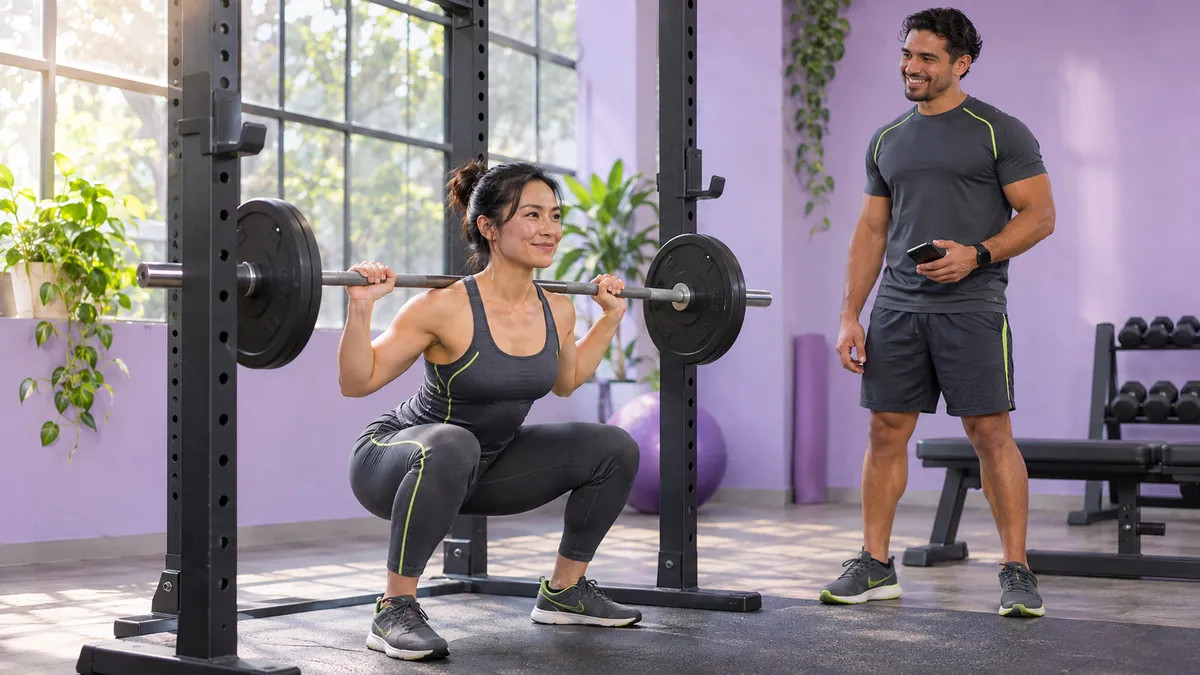
FactEveryone already has abdominal muscles; they show when body fat is low enough. Crunches train the muscle but do not remove the fat over it. Food (a steady deficit) reveals abs; planks, dead bugs, leg raises and heavy squats and deadlifts build a strong core.
The same abdominal-exercise trial saw stronger abs but unchanged waist fat. Vispute 2011. Track your body fat with the Navy tape method instead of counting crunches.
3Do carbs at night make you fat?
MythRice, pasta or bread after 7 pm turns straight into fat.
FactYour body does not switch carbs to fat at a set hour. What decides fat gain is how much you eat across the day and week. A late, heavy dinner can disturb sleep and late-night snacking adds calories, which is where the myth comes from, but the clock is not the problem.
In a six-month trial, people who ate most of their carbs at dinner lost slightly more weight than those who spread them out, on the same calories. Sofer 2011, Obesity
4Will lifting weights make women bulky?
MythWomen who lift heavy end up looking big and masculine.
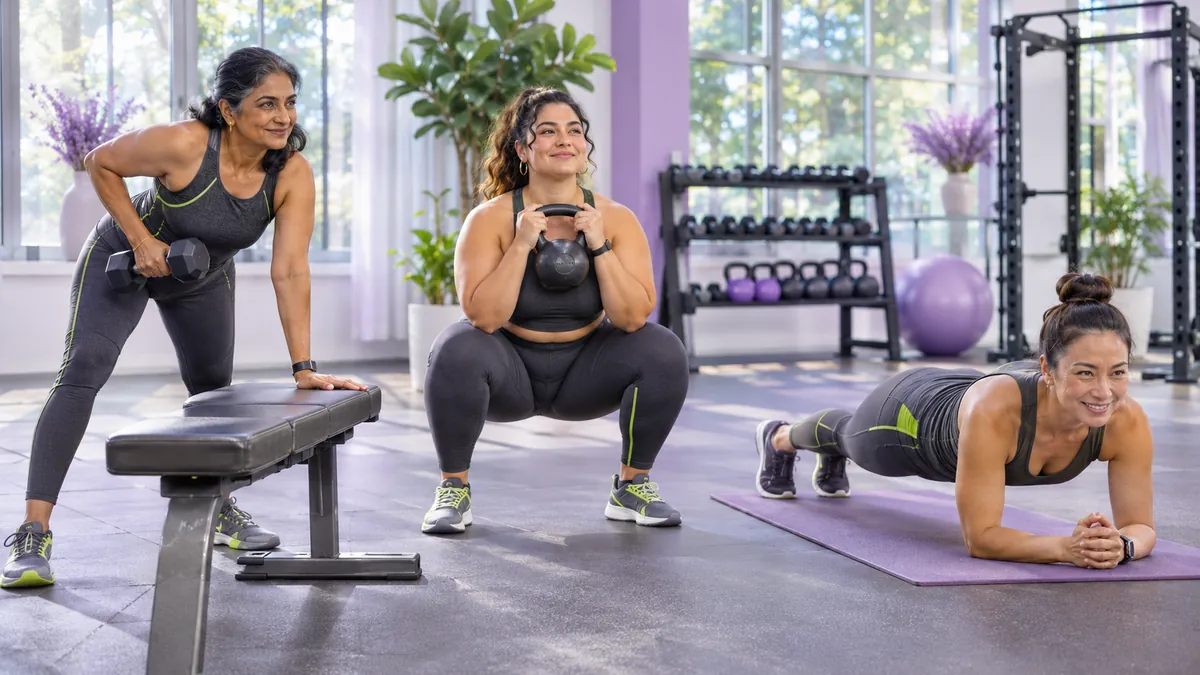
FactWomen have a small fraction of men's testosterone, so muscle comes on slowly. The "bulky" look takes years of dedicated training and eating in a surplus, not a few months of squats. What most women get from lifting is a firmer shape, better posture, stronger bones and easier fat loss.
Women gain muscle at a similar relative rate to men but much less in absolute size; the WHO advises muscle-strengthening work at least twice a week for every adult. Roberts 2020, J Strength Cond Res; WHO 2020 guidelines
5Does sweating more mean I burned more fat?
MythThe more you sweat, the more fat you lose. Sauna belts and sweat suits speed it up.
FactSweat is water and salt your body releases to cool down. The kilo you lose in a hot session comes back as soon as you drink. Sweat depends on heat, humidity and your genes, not on fat burned. Sweat suits and belts only add dehydration risk.
ACSM's position stand on fluids treats sweat loss as water to replace, not fat lost. Sawka 2007, Med Sci Sports Exerc
6Is butter good or bad for weight loss?
MythButter in your coffee melts belly fat. Or the opposite: butter is poison and must be banned.
FactNeither. Butter is about 720 kcal per 100 g, and roughly half of it is saturated fat. A teaspoon (5 g, about 36 kcal) on your toast or vegetables fits easily into a healthy diet; four tablespoons a day is 400 kcal of fat you may not notice. Treat it like any fat or oil: measured, not feared, not worshipped.
The WHO advises keeping saturated fat under 10% of calories. WHO 2023 saturated fat guideline. Values: butter.
7Do I have to give up rice to lose weight?
MythRice makes you fat; cut it out completely.
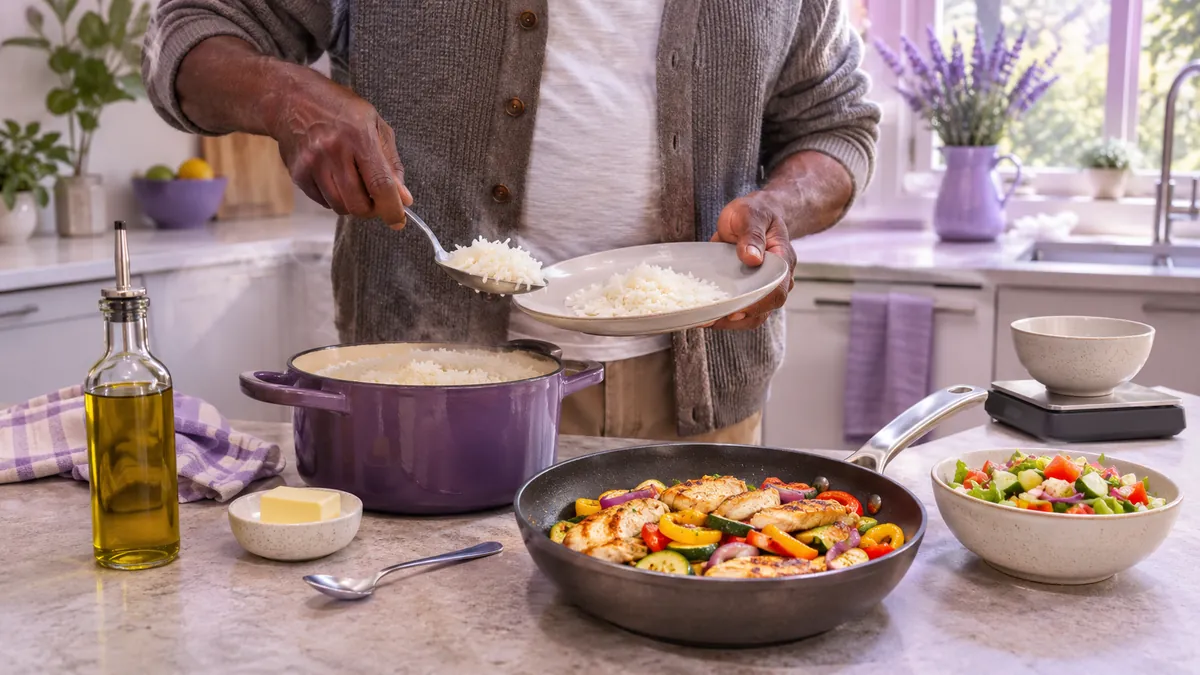
FactRice is not uniquely fattening. A cup of cooked rice (about 150 g) is around 195 kcal, about the same as two and a half slices of bread. What matters is the portion and what it comes with. That said, very large daily servings of white rice are linked to a higher risk of type 2 diabetes, especially in Asian populations, so keep portions measured and fill the rest of the plate with beans, protein and vegetables.
A meta-analysis found each extra daily serving of white rice was linked to about 11% higher diabetes risk, strongest in Asian studies. Hu 2012, BMJ. Values: cooked white rice.
8Does a high-protein diet damage your kidneys?
MythEating lots of protein harms healthy kidneys.
FactIn healthy people, higher protein intake has not been shown to harm kidney function. Kidneys adapt to a higher load, the same way they handle more water. People who already have kidney disease are different and should follow their doctor's protein limit.
A meta-analysis of 28 trials found no difference in kidney function between higher- and normal-protein diets in healthy adults. Devries 2018, J Nutr. How much you need: protein guide.
9Does more cardio always mean more fat loss?
MythTo lose fat, do hours of cardio. The more, the better.
FactCardio is excellent for your heart, mood and fitness, but on its own it usually produces modest weight loss. People tend to eat a little more and move less the rest of the day, cancelling part of it. The deficit comes mostly from food; strength training protects your muscle while you lose fat.
ACSM's review found 150 minutes a week of exercise gives modest weight loss; larger losses need more than 250 minutes or a diet change. Donnelly 2009, Med Sci Sports Exerc
10Do I need supplements to build muscle?
MythYou can't build muscle without protein powder, BCAAs, fat burners and pre-workout.
FactFood, training and sleep build muscle. Protein powder is just convenient food. Creatine monohydrate has strong evidence for strength; caffeine helps performance. Most other products (BCAAs when protein is adequate, "fat burners", testosterone boosters) have weak evidence, and some are contaminated with banned substances.
The IOC consensus statement advises a food-first approach and lists only a few supplements with good evidence. Maughan 2018, Br J Sports Med; Kreider 2017, ISSN creatine
11Do detox teas and juice cleanses remove toxins and fat?
MythA 7-day detox tea or juice cleanse flushes toxins and melts fat.
FactYour liver and kidneys clear waste around the clock. Detox teas often contain laxatives (like senna) or diuretics, so the scale drops through water and bowel loss, not fat. Juice cleanses cut protein and fibre. The weight returns within days.
A critical review found no good evidence that commercial detox diets remove toxins or lead to lasting weight loss. Klein and Kiat 2015, J Hum Nutr Diet
12Do I need to eat every 2 hours to boost metabolism?
MythSmall meals every 2–3 hours keep your metabolism fired up.
FactThe energy you burn digesting food depends on how much you eat in total, not how often. Six small meals and three bigger ones of the same food burn the same. Eat at the rhythm that controls your hunger and lets you reach 25–40 g of protein per meal.
A meta-analysis found no meaningful fat-loss benefit from more frequent meals when calories were equal. Schoenfeld 2015, Nutr Rev
13Is "no pain, no gain" true?
MythIf you're not sore the next day, the workout didn't work.
FactSoreness (DOMS) mostly reflects doing something new or unaccustomed, and it fades as your body adapts, while the muscle keeps growing. Progress is measured by doing a little more over time: more reps, more weight, better form. Sharp or joint pain is a signal to stop, not push.
Early in training, muscle-building tracked hypertrophy only after the muscle damage had faded; soreness is not the driver. Damas 2016, J Physiol; Cheung 2003, Sports Med
14Does muscle turn into fat when you stop training?
MythStop going to the gym and your muscle turns into fat.
FactMuscle and fat are different tissues; one cannot become the other. When you stop training, muscle slowly shrinks; if you keep eating the same amount while moving less, you gain fat. The two happen side by side, which is why it looks like a swap. Muscle also comes back faster when you restart.
Detraining studies show gradual losses in muscle size and strength over weeks to months, not a conversion to fat. Mujika and Padilla 2001, Med Sci Sports Exerc
15Does fasted morning cardio burn more fat?
MythCardio on an empty stomach burns far more body fat.
FactYou burn a higher share of fat during a fasted session, but your body balances it later in the day. Over weeks, fat loss is the same as long as calories match. Train fasted or fed, whichever feels better.
In a 4-week trial with both groups in a deficit, fasted and fed cardio gave the same fat loss. Schoenfeld 2014, JISSN
16Will skipping breakfast make me gain weight?
MythBreakfast kick-starts your metabolism; skipping it makes you fat.
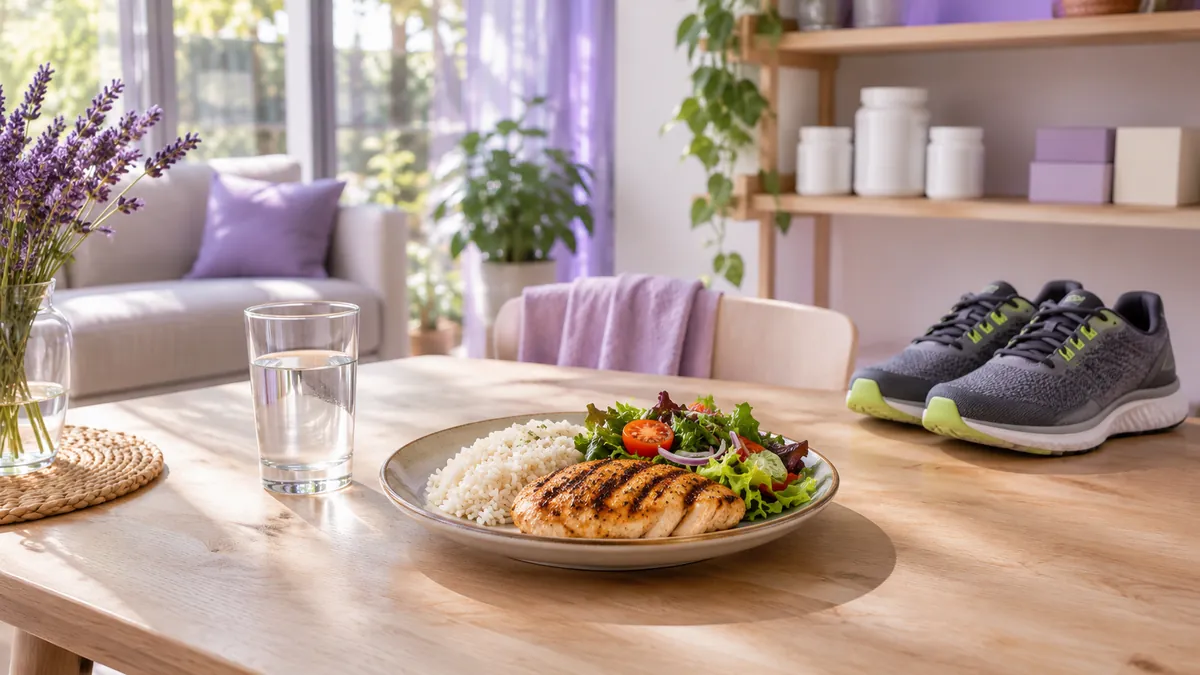
FactBreakfast does not switch on your metabolism. In trials, people told to eat breakfast ate more calories overall, not fewer. That said, a protein-rich breakfast helps many people reach their protein target and avoid a 4 pm snack attack. Eat it if it helps you, skip it if it doesn't.
A BMJ meta-analysis of randomised trials found breakfast did not aid weight loss, and breakfast eaters ate about 260 kcal more a day. Sievert 2019, BMJ
17Are honey and brown sugar healthy sugars?
MythHoney, brown sugar and maple syrup are healthy, so you can eat them freely.
FactHoney is about 82% sugar, at around 300 kcal per 100 g. It does carry traces of minerals, but a tablespoon (21 g, about 64 kcal) has under 0.1 mg of iron, against a daily need of 8–18 mg. Brown sugar is white sugar with a little molasses. To your waistline and blood sugar, all of these count as added sugar.
The WHO advises keeping free sugars, including honey and syrups, under 10% of calories, ideally under 5%. WHO 2015 sugars guideline; NIH iron fact sheet. Values: honey.
18Do green tea or warm lemon water burn fat?
MythGreen tea, apple cider vinegar or warm lemon-honey water in the morning burns belly fat.
FactThese drinks are fine, and they help if they replace sugary coffee drinks or juice. But none of them burn a meaningful amount of fat. Lemon water is water with lemon; adding honey adds calories.
A Cochrane review found green tea's effect on weight in adults was very small and not clinically important. Jurgens 2012, Cochrane
19Do I have to drink protein within 30 minutes of a workout?
MythMiss the 30-minute "anabolic window" and the workout is wasted.
FactTotal daily protein matters far more than timing. A protein-rich meal within a couple of hours either side of training is sensible, but there is no 30-minute deadline.
A meta-analysis found the apparent timing effect disappeared once total daily protein was matched. Schoenfeld 2013, JISSN
20Are squats bad for your knees?
MythDeep squats ruin your knees.
FactWith good technique and sensible loads, squats strengthen the muscles and tissues that protect the knee. The fear of deep squats is not backed by evidence in healthy people. Start with bodyweight or light loads, keep the whole foot down and knees tracking over the toes, and progress slowly. If you have a knee injury, get it assessed first.
A review of knee and spine loading found no evidence that deep squats raise injury risk in healthy, trained people. Hartmann 2013, Sports Med
How can I spot a fitness myth myself?
You will meet new myths every month. A few questions catch most of them:
- Does it promise a shortcut around calories, training or sleep? Fat-burning drinks, spot reduction and magic meal times all do. Real change is slow and boring.
- Is someone selling something? The louder the claim, the more likely there is a product attached.
- Is the evidence a person or a study? "It worked for me" is one data point. Look for randomised trials and meta-analyses, ideally summarised by bodies like the WHO, ISSN or ACSM.
- Does it make one food a hero or a villain? Rice, butter, sugar and fruit are not good or evil; amounts and context are.
- Does it mix up water and fat? Detoxes, sweat suits and low-carb first weeks all drop water weight fast. Fat loss is at most about 1% of bodyweight a week.
So what actually works?
Strip away the myths and the plan fits on a sticky note:
- Eat in a modest calorie deficit to lose fat, or a small surplus to gain muscle. Find your number with our calorie and TDEE guide.
- Hit your protein: 1.6–2.2 g per kg of bodyweight, spread over 3–4 meals. See how much protein you need.
- Lift 2–4 times a week and add a little weight or a rep over time; the beginner workout guide explains sets, reps and progressive overload.
- Walk daily and add cardio you enjoy for heart health.
- Sleep 7–9 hours; one short night changes hunger and workouts.
- Track for a few weeks so you know what you actually eat, then adjust based on the weekly average.
The bottom line
Fat loss comes from a steady calorie deficit, not from crunches, sweat, detox teas or meal timing. Muscle comes from lifting with progressive overload plus 1.6–2.2 g/kg of protein. Rice, butter and carbs at night are fine in measured portions, and sleep and consistency decide most of the result.
Frequently asked questions
Can you lose belly fat without losing weight elsewhere?
No. Fat loss happens across the whole body in a pattern set mostly by genetics, sex and age. A calorie deficit plus strength training reduces belly fat along with fat everywhere else; ab exercises alone do not target it.
Is it bad to eat rice at night?
Not in itself. Total daily calories decide fat gain, and a trial found people eating most carbs at dinner lost slightly more weight on the same calories. Keep portions measured and finish dinner a couple of hours before bed for better sleep.
Is butter healthy or unhealthy?
In small amounts it fits a healthy diet. Butter is about 720 kcal per 100 g and roughly half saturated fat, so a teaspoon is reasonable while several tablespoons a day add a lot of calories and saturated fat. The WHO advises keeping saturated fat under 10% of calories.
Does sweating help you lose weight?
Only water weight, which returns when you rehydrate. Sweat is how your body cools down; it is not a measure of fat burned.
Is protein powder necessary?
No. It is a convenient protein food. You can meet your protein target from beans and lentils, dairy, soya, eggs, chicken and fish; powder just makes it easier and cheaper per gram for some people.
Do women need a different workout to avoid getting bulky?
No. Women benefit from the same progressive strength training as men. Building large muscles takes years of focused training and extra food; what most women see is better shape, strength and bone health.
How do I know if a fitness claim is true?
Ask whether it promises a shortcut, whether someone is selling something, and whether the evidence is a testimonial or a controlled study. Claims backed by meta-analyses and summarised by the WHO, ISSN or ACSM are a safer bet.
Keep reading
 How much protein do I need?Grams per kg by goal, with a calculator
 Vitamins and mineralsB12, D, iron, calcium and a gap checker
 What one short night does to your resultsSleep, hunger and muscle
 Calories and TDEEThe number behind every fat-loss plan
Sources
- Vispute SS, Smith JD, LeCheminant JD, Hurley KS. The effect of abdominal exercise on abdominal fat. Journal of Strength and Conditioning Research 2011;25(9):2559–2564. PubMed
- Sofer S, Eliraz A, Kaplan S et al. Greater weight loss and hormonal changes after 6 months diet with carbohydrates eaten mostly at dinner. Obesity 2011;19(10):2006–2014. PubMed
- Roberts BM, Nuckols G, Krieger JW. Sex differences in resistance training: a systematic review and meta-analysis. Journal of Strength and Conditioning Research 2020;34(5):1448–1460. PubMed
- Bull FC et al. World Health Organization 2020 guidelines on physical activity and sedentary behaviour. British Journal of Sports Medicine 2020;54:1451–1462. PubMed
- Sawka MN et al. American College of Sports Medicine position stand: exercise and fluid replacement. Medicine and Science in Sports and Exercise 2007;39(2):377–390. PubMed
- World Health Organization. Saturated fatty acid and trans-fatty acid intake for adults and children: WHO guideline, 2023. who.int
- Hu EA, Pan A, Malik V, Sun Q. White rice consumption and risk of type 2 diabetes: meta-analysis and systematic review. BMJ 2012;344:e1454. PubMed
- Devries MC, Sithamparapillai A, Brimble KS et al. Changes in kidney function do not differ between healthy adults consuming higher- compared with lower- or normal-protein diets: a systematic review and meta-analysis. Journal of Nutrition 2018;148(11):1760–1775. PubMed
- Donnelly JE et al. American College of Sports Medicine position stand: appropriate physical activity intervention strategies for weight loss and prevention of weight regain for adults. Medicine and Science in Sports and Exercise 2009;41(2):459–471. PubMed
- Maughan RJ et al. IOC consensus statement: dietary supplements and the high-performance athlete. British Journal of Sports Medicine 2018;52:439–455. PubMed
- Kreider RB et al. International Society of Sports Nutrition position stand: safety and efficacy of creatine supplementation in exercise, sport, and medicine. Journal of the International Society of Sports Nutrition 2017;14:18. PubMed
- Klein AV, Kiat H. Detox diets for toxin elimination and weight management: a critical review of the evidence. Journal of Human Nutrition and Dietetics 2015;28(6):675–686. PubMed
- Schoenfeld BJ, Aragon AA, Krieger JW. Effects of meal frequency on weight loss and body composition: a meta-analysis. Nutrition Reviews 2015;73(2):69–82. PubMed
- Damas F et al. Resistance training-induced changes in integrated myofibrillar protein synthesis are related to hypertrophy only after attenuation of muscle damage. Journal of Physiology 2016;594(18):5209–5222. PubMed
- Cheung K, Hume P, Maxwell L. Delayed onset muscle soreness: treatment strategies and performance factors. Sports Medicine 2003;33(2):145–164. PubMed
- Mujika I, Padilla S. Muscular characteristics of detraining in humans. Medicine and Science in Sports and Exercise 2001;33(8):1297–1303. PubMed
- Schoenfeld BJ, Aragon AA, Wilborn CD et al. Body composition changes associated with fasted versus non-fasted aerobic exercise. Journal of the International Society of Sports Nutrition 2014;11:54. PubMed
- Sievert K, Hussain SM, Page MJ et al. Effect of breakfast on weight and energy intake: systematic review and meta-analysis of randomised controlled trials. BMJ 2019;364:l42. PubMed
- World Health Organization. Guideline: sugars intake for adults and children, 2015. who.int
- Jurgens TM, Whelan AM, Killian L et al. Green tea for weight loss and weight maintenance in overweight or obese adults. Cochrane Database of Systematic Reviews 2012;12:CD008650. PubMed
- Schoenfeld BJ, Aragon AA, Krieger JW. The effect of protein timing on muscle strength and hypertrophy: a meta-analysis. Journal of the International Society of Sports Nutrition 2013;10:53. PubMed
- Hartmann H, Wirth K, Klusemann M. Analysis of the load on the knee joint and vertebral column with changes in squatting depth and weight load. Sports Medicine 2013;43(10):993–1008. PubMed
- Paluch AE et al. Daily steps and all-cause mortality: a meta-analysis of 15 international cohorts. Lancet Public Health 2022;7(3):e219–e228. PubMed
- Al Khatib HK, Harding SV, Darzi J, Pot GK. The effects of partial sleep deprivation on energy balance: a systematic review and meta-analysis. European Journal of Clinical Nutrition 2017;71:614–624. PubMed
- NIH Office of Dietary Supplements. Iron: fact sheet for health professionals. ods.od.nih.gov
This article is general information for healthy adults, not medical advice. If you have a medical condition, are pregnant, or take medication, talk to a doctor or registered dietitian before changing your diet, sleep or training.