Nutrition · Minerals
Iron deficiency: symptoms, daily needs and best foods
Key takeaways
- 8 / 18 mga day for men / women aged 19–50 (27 mg in pregnancy)US National Academies, 2001 (NIH ODS)
- 1.8×more iron for vegetarians and vegans, because plant iron is absorbed lessUS National Academies, 2001 (NIH ODS)
- 30%of women aged 15–49 worldwide had anaemia in 2019World Health Organization, 2023
- 15–35% vs 2–20%absorbed from animal (heme) vs plant (non-heme) ironNIH Office of Dietary Supplements
DefinitionIron deficiency is a shortage of iron in the body: first the stores (ferritin) run low, and if it continues the body makes less haemoglobin, which is iron-deficiency anaemia.
Iron carries oxygen in your blood (inside haemoglobin) and in your muscles. When intake does not cover losses, your body first empties its stores, then makes fewer and smaller red blood cells. This guide gives you your daily number, the foods that actually deliver it, and the simple meal tricks that help your body absorb more. If you want the wider picture of vitamins and minerals, start with our guide to the most common nutrient gaps.
What are the symptoms of iron deficiency?
The most common symptoms are tiredness and lack of energy, breathlessness on exertion, pale skin, headaches, poor concentration and brittle nails. Some people crave ice or non-food items (pica). Symptoms build slowly and overlap with many other conditions, so they suggest low iron but cannot diagnose it; a blood test can.
Iron deficiency happens in stages. First your stores (measured as ferritin) fall while haemoglobin is still normal: this is iron deficiency without anaemia, and it can already make some people tired. Then red blood cell production suffers, and finally haemoglobin drops below normal, which is iron-deficiency anaemia. That is why a doctor usually checks a full blood count and ferritin together.
- See a doctor promptly if you have very heavy periods, black or bloody stools, unexplained weight loss, chest pain or fainting. Low iron in men and in women after menopause always needs a cause found, because it can come from hidden blood loss.
How much iron do I need a day?
The US recommended amounts (RDA) are 8 mg a day for men 19+ and women 51+, 18 mg for women 19–50, 27 mg in pregnancy and 9 mg while breastfeeding. Teens need 11 mg (boys) or 15 mg (girls). Vegetarians and vegans should aim for about 1.8 times these figures. The adult upper limit is 45 mg a day.
| Group | Mixed diet | Vegetarian / vegan (×1.8) |
|---|---|---|
| Men 19+ | 8 mg | ≈ 14 mg |
| Women 19–50 | 18 mg | ≈ 32 mg |
| Women 51+ | 8 mg | ≈ 14 mg |
| Pregnancy | 27 mg | ≈ 49 mg* |
| Breastfeeding, 19+ | 9 mg | ≈ 16 mg |
| Boys 14–18 / girls 14–18 | 11 / 15 mg | ≈ 20 / 27 mg |
Iron calculator: what is my daily target?
Pick your sex, age, pregnancy stage and diet. The calculator looks up the US recommended amount for your group and multiplies it by 1.8 if you eat no meat, poultry or fish, then lists a day of everyday foods that gets close. A vegetarian woman of 30 needs about 32 mg a day.
Your daily iron target
Example shown: vegetarian woman, 30, not pregnant: 18 mg × 1.8 ≈ 32 mg a day. 200 g cooked lentils, 150 g firm tofu, 150 g cooked chickpeas, 30 g pumpkin seeds, 100 g spinach, a bowl of quinoa and 30 g dark chocolate give about 26 mg; a fortified breakfast cereal or bread (check the label) covers the rest, with citrus or red pepper at meals.
A day of food that gets close
- 200 g cooked lentils: 6.6 mg
- 150 g firm tofu: 3.6 mg
- 150 g cooked chickpeas: 4.4 mg
- 30 g pumpkin seeds: 2.6 mg
- 100 g raw spinach: 2.7 mg
- 185 g cooked quinoa: 2.8 mg
- 30 g dark chocolate (70–85%): 3.6 mg
These give about 26 mg. A fortified breakfast cereal or bread covers the rest; iron per serving varies, so check the label. Add an orange or red pepper to the iron-rich meals.
Who is most at risk of low iron?
The groups most at risk are women with periods (especially heavy ones), pregnant women, vegetarians and vegans, frequent blood donors, endurance athletes, infants and young children, and people with conditions causing blood loss or poor absorption, such as coeliac disease. In 2019 the WHO estimated anaemia in 37% of pregnant women and 40% of children aged 6–59 months.
Iron deficiency is not the only cause of anaemia, but it is the most common one worldwide. If you belong to one of these groups and feel run down, ask for a blood test rather than guessing.
What is the difference between heme and non-heme iron?
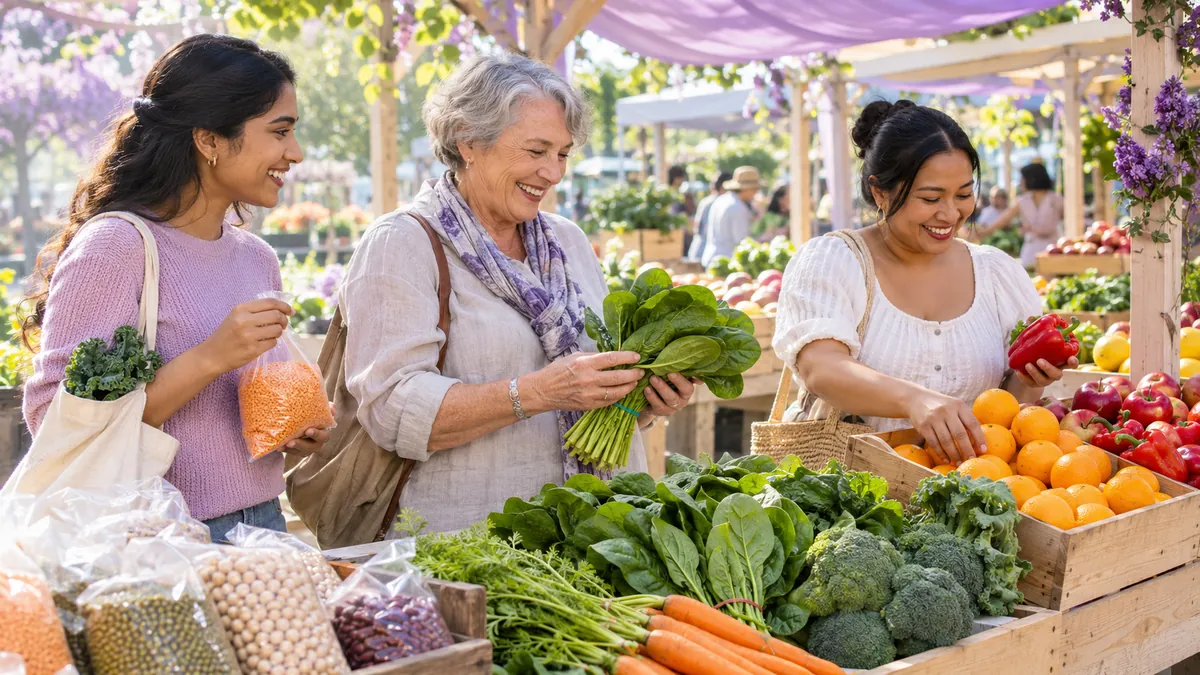
Heme iron comes from meat, poultry and fish and is absorbed well: about 15–35%. Non-heme iron comes from plants, eggs, dairy and fortified foods and is absorbed far less: about 2–20%, depending on what else is in the meal. That gap is why vegetarians need roughly 1.8 times more iron on paper.
Non-heme absorption is flexible. Vitamin C and a little meat or fish in the same meal raise it; phytates (in whole grains and pulses), polyphenols (in tea and coffee) and calcium lower it. Your body also absorbs more when its stores are low and less when they are full.
Which foods are highest in iron?
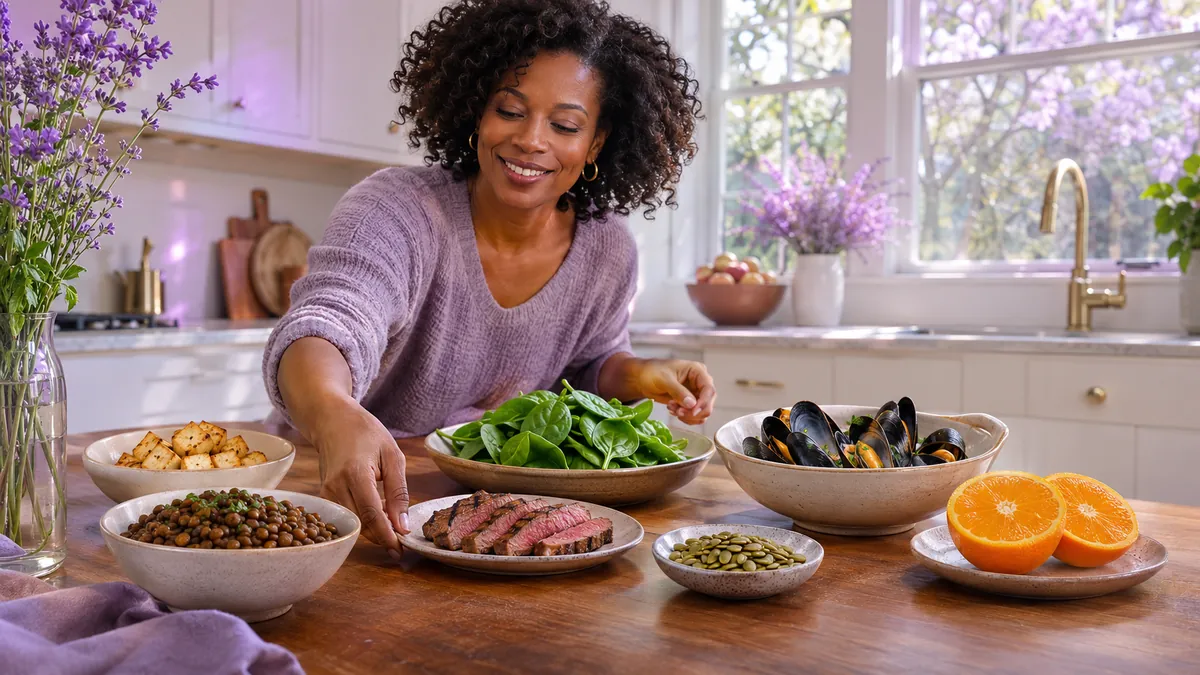
Per 100 g, the richest everyday sources are chicken liver (about 9 mg), pumpkin seeds (8.8 mg), beef liver, oysters and mussels (4–5 mg), and among plants lentils, chickpeas and tofu (2.4–3.3 mg). Dark chocolate is high per 100 g but eaten in small amounts. Fortified cereals can be very high; check the label.
| Food | Type | Iron / 100 g | Typical portion |
|---|---|---|---|
| Chicken liver | Heme | 9.0 mg | 100 g: 9 mg |
| Beef liver | Heme | 4.9 mg | 100 g: 4.9 mg |
| Oysters | Heme | 4.6 mg | 6 oysters (85 g): 3.9 mg |
| Mussels | Heme | 4.0 mg | 85 g: 3.4 mg |
| Sirloin steak, raw weight | Heme | 1.5 mg | 150 g: 2.3 mg |
| Pumpkin seeds | Plant | 8.8 mg | 30 g: 2.6 mg |
| Lentils, cooked | Plant | 3.3 mg | 200 g: 6.6 mg |
| Chickpeas, cooked | Plant | 2.9 mg | 150 g: 4.4 mg |
| Spinach, raw | Plant | 2.7 mg | 100 g: 2.7 mg |
| Tofu, firm | Plant | 2.4 mg | 150 g: 3.6 mg |
| Quinoa, cooked | Plant | 1.5 mg | 185 g: 2.8 mg |
| Dark chocolate 70–85% | Plant | 11.9 mg | 30 g: 3.6 mg |
| Egg, boiled | Non-heme | 1.2 mg | 2 eggs: 1.2 mg |
| Fortified breakfast cereal | Fortified | varies | see the label |
How can I absorb more iron from food?
Add vitamin C to iron-rich meals (citrus, kiwi, tomatoes, peppers), keep tea and coffee away from those meals, and do not take calcium supplements or large amounts of dairy at the same time. A little meat or fish with beans or grains also helps. Soaking, sprouting and fermenting grains and pulses reduce phytates that block iron.
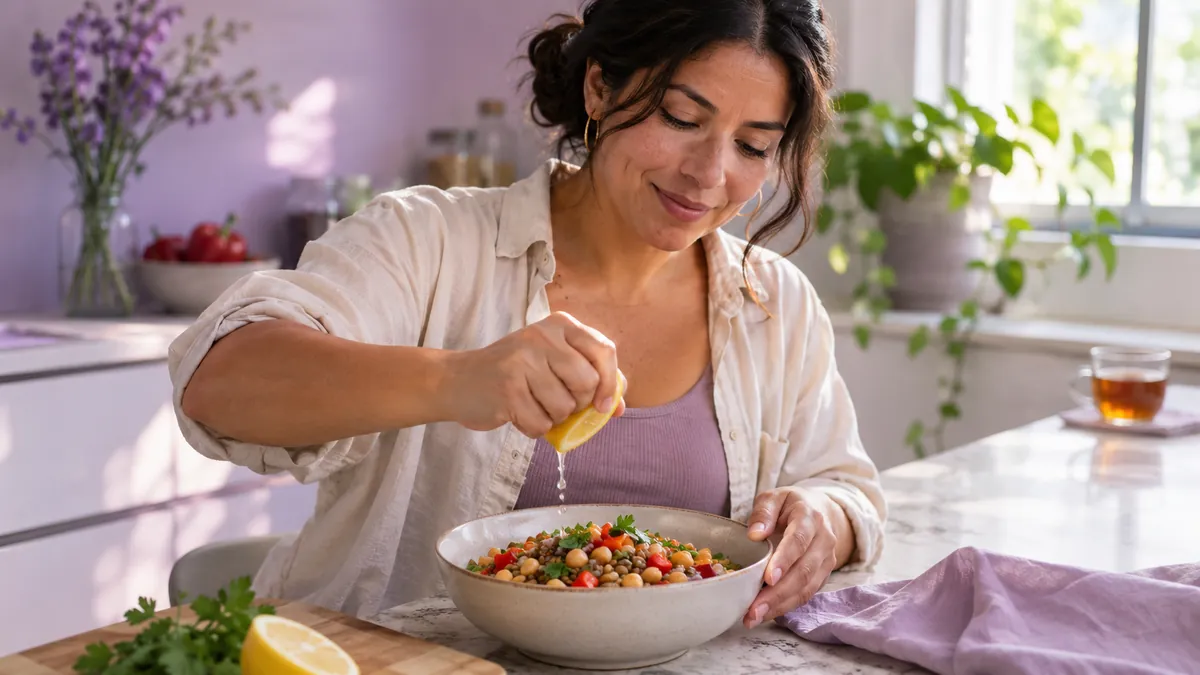
- Vitamin C at the same meal. An orange after a lentil curry, red pepper (128 mg vitamin C per 100 g) in a chickpea salad, lemon on greens.
- Tea and coffee between meals. Their polyphenols reduce non-heme iron absorption when drunk with food; a gap of an hour or so is a simple rule.
- Calcium at a different time. Calcium can reduce the absorption of both heme and non-heme iron when taken together. If you take both supplements, take them at different times of day.
- Mix sources. Meat, poultry or fish raise absorption of the plant iron eaten with them.
Should I take an iron supplement?
Only if a blood test shows you need one, or your doctor or midwife advises it (it is common in pregnancy). Iron tablets work well for diagnosed deficiency, but they often cause constipation, nausea or stomach pain, and taking iron you do not need can cause iron overload. Your doctor sets the dose and how long to take it.
- The adult upper limit is 45 mg a day from all sources unless a doctor prescribes more for treatment.
- Raising low iron takes time: your doctor will recheck your blood after treatment to confirm your stores are refilled.
- Keep iron tablets, including prenatal vitamins, out of children's reach. An accidental overdose is a medical emergency.
How can I check my iron intake over a month?
Log what you eat for a few weeks and look at the average, not single days. One low day means nothing; thirty days at half your target is a pattern worth fixing. In Fitrang, the Nutrients list shows iron against your target with 30 daily bars and lists the richest foods for your diet.
Those suggestions follow how you eat (vegetarian, eggs or meat) and are sized to close the gap. Iron tablets are not in a food log, so a 30-day average says nothing about a supplement you take.
The bottom line
Most men and older women need 8 mg of iron a day, women 19–50 need 18 mg and pregnant women 27 mg; on a vegetarian or vegan diet aim for about 1.8 times that. Build meals on lentils, beans, tofu, seeds, fortified cereals and, if you eat them, meat and seafood, add vitamin C to those meals and keep tea and coffee between meals. If you feel tired and run down, get a blood test before taking iron tablets.
Frequently asked questions
What are the signs of low iron?
Tiredness, low energy, breathlessness on exertion, pale skin, headaches, brittle nails and sometimes cravings for ice. Low iron stores can cause tiredness even before anaemia develops. These signs overlap with many other conditions, so ask a doctor for a blood test (full blood count and ferritin).
Which foods are highest in iron?
Per 100 g: chicken liver (about 9 mg), pumpkin seeds (8.8 mg), beef liver, oysters and mussels (4 to 5 mg), lentils and chickpeas (about 3 mg) and firm tofu (about 2.4 mg). Fortified cereals can be higher; check the label. Iron from meat and fish is absorbed best.
How can vegetarians get enough iron?
Aim for about 1.8 times the standard RDA (about 32 mg for women 19 to 50, 14 mg for men). Build meals on lentils, beans, chickpeas, tofu, seeds and fortified cereals, add vitamin C at the same meal, and drink tea or coffee between meals rather than with them.
Does spinach really have a lot of iron?
Less than its reputation. Raw spinach has about 2.7 mg per 100 g, but oxalates bind much of it, so little is absorbed. Lentils, beans, tofu, pumpkin seeds and fortified foods are better plant sources.
Does tea or coffee block iron?
They reduce absorption of plant (non-heme) iron when drunk with a meal, because of their polyphenols. You do not need to give them up: drink them an hour or so before or after iron-rich meals.
Should I take an iron supplement without a blood test?
No. Tiredness has many causes, and extra iron you do not need can build up and cause harm, especially in people with haemochromatosis. A blood test shows whether you are low, and a doctor can set the dose and duration.
How long does it take to raise iron levels?
It depends on how low you are and on the treatment. With supplements prescribed by a doctor, haemoglobin usually improves before the iron stores do, so treatment often continues after you feel better, and a repeat blood test confirms when stores are back to normal.
Keep reading
 The vitamins and minerals most people lackB12, vitamin D, iron and calcium, with a gap checker
 How much protein do I need?Plant and animal protein, per meal
 Macros made simpleProtein, carbs and fat on one plate
 20 fitness and diet myths vs factsIncluding the supplement ones
Sources
- NIH Office of Dietary Supplements. Iron: Fact Sheet for Health Professionals. ods.od.nih.gov
- World Health Organization. Anaemia (fact sheet). who.int
- Hurrell R, Egli I. Iron bioavailability and dietary reference values. American Journal of Clinical Nutrition 2010;91(5):1461S–1467S. PubMed
- U.S. Department of Agriculture, Agricultural Research Service. FoodData Central. fdc.nal.usda.gov
- Institute of Medicine. Dietary Reference Intakes for Vitamin A, Vitamin K, Arsenic, Boron, Chromium, Copper, Iodine, Iron, Manganese, Molybdenum, Nickel, Silicon, Vanadium, and Zinc (2001). nap.nationalacademies.org
This article is general information for healthy adults, not medical advice. If you have a medical condition, are pregnant, or take medication, talk to a doctor or registered dietitian before changing your diet, sleep or training.