Nutrition · Vitamins
Vitamin B12 for vegetarians and vegans

Key takeaways
- 2.4 mcga day for adults; 2.6 in pregnancy, 2.8 while breastfeedingUS National Academies (NIH ODS)
- 1.5–2 mcgis about all the body absorbs actively from one dose, so supplements are biggerNIH Office of Dietary Supplements
- 10 mcg / dayor 2,000 mcg / week covers a vegan's needsThe Vegan Society
- 10–30%of older adults absorb B12 from food poorlyNIH Office of Dietary Supplements
DefinitionVitamin B12 (cobalamin) is a vitamin made by microbes that the body needs for healthy nerves, red blood cells and DNA; people get it from animal foods, fortified foods or supplements.
Vitamin B12 keeps your nerves healthy and helps you make red blood cells and DNA. It is made by microbes, not by plants or animals, and reaches our diet mainly through animal foods and fortified products. That makes it the one nutrient a fully plant-based diet cannot cover without help. This guide gives you the numbers, the foods that count (and the ones that do not), and supplement doses that work. For the wider picture, see our guide to the most common nutrient gaps.
Do vegetarians and vegans need to take B12?
Vegans: yes, always, from fortified foods or a supplement, because no plant food reliably supplies active B12. Vegetarians: often. Dairy and eggs contain B12, but a review of studies found depletion or deficiency common among vegetarians and higher still among vegans. If you eat little dairy, a low-dose supplement is the simple insurance.
That review (Pawlak and colleagues, 2013) found deficiency rates of 62% in pregnant vegetarian women, 21–41% in adolescents and 11–90% in older adults across the studies it included, with rates higher in vegans and in people vegetarian since birth. The authors concluded that vegetarians should take preventive measures, including regular B12 supplements.
How much B12 do I need a day?
The US recommended amount (RDA) is 2.4 mcg a day for everyone 14 and over, 2.6 mcg in pregnancy and 2.8 mcg while breastfeeding. No upper limit has been set because B12 has low toxicity. Adults over 50 are advised to get most of theirs from fortified foods or supplements, which their bodies absorb better than B12 bound in food.
| Group | RDA per day |
|---|---|
| Teens 14–18 and adults | 2.4 mcg |
| Pregnancy | 2.6 mcg |
| Breastfeeding | 2.8 mcg |
| Adults over 50 | 2.4 mcg, mainly from fortified foods or supplements |
What are the symptoms of B12 deficiency?
Early signs are often vague: tiredness, weakness, breathlessness and pale skin from anaemia, plus a sore tongue, poor appetite or weight loss. Nerve signs include pins and needles or numbness in the hands and feet, balance problems, poor memory, confusion and low mood. Deficiency develops slowly, often over years, and nerve damage can become permanent.
One trap: a high intake of folic acid can correct the anaemia of B12 deficiency while the nerve damage continues. So normal blood counts do not rule out low B12, and anyone with nerve symptoms needs the specific B12 tests below.

Which foods contain vitamin B12?
B12 comes naturally from animal foods: liver, clams, mussels and oysters are richest, then fish, meat, eggs and dairy. For vegans, the reliable sources are fortified foods such as some plant milks, breakfast cereals and nutritional yeast. Fortification varies by brand and country, so read the label for the amount per serving.
| Food | B12 / 100 g | Typical portion |
|---|---|---|
| Beef liver | 59 mcg | 100 g: 59 mcg |
| Mussels | 12 mcg | 85 g: 10 mcg |
| Clams | 11 mcg | 85 g: 9.6 mcg |
| Salmon | 3.2 mcg | 113 g: 3.6 mcg |
| Egg, boiled | 1.1 mcg | 2 eggs: 1.1 mcg |
| Greek yoghurt, low fat | 0.8 mcg | 170 g pot: 1.4 mcg |
| Milk | 0.45 mcg | 250 ml glass: 1.1 mcg |
| Cheddar cheese | 1.1 mcg | 30 g: 0.3 mcg |
| Paneer | 0.5 mcg | 100 g: 0.5 mcg |
| Soy milk, fortified | 1.1 mcg | 250 ml: 2.7 mcg (if fortified) |
| Nutritional yeast, fortified | varies | see the label |
| Breakfast cereal, fortified | varies | see the label |
On paper, a lacto-ovo vegetarian day of a glass of milk, a pot of yoghurt and two eggs gives about 3.6 mcg. In practice many vegetarians eat less dairy than that, and the body absorbs only part of the B12 in each meal, which is why intake checks and blood tests matter.
Do spirulina, tempeh and seaweed count as B12 sources?
No, not reliably. Spirulina tablets contain mostly pseudovitamin B12, a look-alike that is inactive in humans and can make blood tests look better than they are. Tempeh and other fermented foods vary from batch to batch. Dried nori contains some active B12, but amounts vary, so none of these replace fortified foods or supplements.
The spirulina entry in our food database lists no active B12 for this reason. If a product claims to be a natural vegan B12 source, treat it as a bonus at best and keep your fortified foods or supplement.
How much B12 should a vegan take as a supplement?
The Vegan Society advises one of three options: fortified foods two or three times a day giving at least 3 mcg in total, a daily supplement of at least 10 mcg, or a weekly supplement of at least 2,000 mcg. The doses look large because the body absorbs only a small share of a big single dose.
Here is why. The intrinsic-factor system in your gut absorbs only about 1.5–2 mcg from one meal or tablet. Beyond that, roughly 1% of a large dose gets in by passive diffusion. So 2,000 mcg once a week works out to an adequate absorbed amount, and so does 10 mcg every day. The Vegan Society suggests staying below 5,000 mcg a week, even though no toxicity has been shown at higher intakes.
| Option | How | Good for |
|---|---|---|
| Fortified foods | About 1 mcg, three times a day, a few hours apart (for example fortified plant milk) | People who like food-first; needs label reading |
| Daily tablet | At least 10 mcg once a day | Most people; cheap and simple |
| Weekly tablet | At least 2,000 mcg once a week | People who forget daily pills; works even with weaker intrinsic factor |

How is B12 deficiency tested?
A doctor usually starts with serum B12 and a full blood count. Because serum B12 can look normal in early deficiency, they may add methylmalonic acid (MMA), which rises when cells lack B12 and is the more specific marker, or homocysteine, which rises too but also with low folate. Some labs measure holotranscobalamin, the active form.
If you are vegan, have been vegetarian for years, are over 50, or take metformin or acid-reducing medicine, ask your doctor how often to test. Take any results to your doctor rather than interpreting them alone, because reference ranges differ between labs.
Why do over-50s and metformin or PPI users absorb less B12?
B12 in food is bound to protein and needs stomach acid to release it. With age, many people develop atrophic gastritis and make less acid, so 10–30% of older adults absorb food B12 poorly. Long-term metformin and acid-reducing medicines (proton-pump inhibitors and H2 blockers) also reduce absorption.
The free B12 in supplements and fortified foods does not need stomach acid to be released, which is why the RDA advice for over-50s points to them. If you take one of these medicines, do not stop it; ask your doctor whether your B12 should be checked.
How can I check whether my diet covers B12?
Log a couple of weeks of normal eating and look at the 30-day average. In Fitrang you tell the app whether you eat vegetarian, eggs or meat; its Nutrients list then shows B12, iron, zinc and calcium against your target with 30 daily bars, and suggests foods you eat to close a gap.
Supplements are separate: a food log cannot see them, so if you take B12 tablets a low food number is expected.
The bottom line
Adults need 2.4 mcg of B12 a day. Vegans should always use fortified foods or a supplement (at least 10 mcg daily or 2,000 mcg weekly), and vegetarians who eat little dairy should do the same. Spirulina and seaweed do not count. Over-50s and people on metformin or acid-reducing medicines absorb less, so ask a doctor about testing, and never ignore tingling, numbness or memory changes.
Frequently asked questions
Can you get B12 from plants?
Not reliably. Plants do not make B12. Spirulina contains mostly an inactive look-alike, and tempeh and seaweed vary too much to count on. Vegans need fortified foods (some plant milks, cereals, nutritional yeast) or a supplement.
How much B12 should a vegan take?
The Vegan Society advises at least 10 mcg a day as a supplement, or at least 2,000 mcg once a week, or fortified foods two or three times a day giving at least 3 mcg. All three provide enough absorbed B12 for people with normal absorption.
Is 1,000 mcg of B12 too much?
No upper limit has been set because B12 has low toxicity, and only about 1% of a large dose is absorbed. 1,000 mcg is a common tablet strength. More than you need adds nothing, though, and the Vegan Society suggests staying below 5,000 mcg a week.
Do lacto-vegetarians need B12 supplements?
Often. Milk, yoghurt, cheese and eggs contain B12, and about a glass of milk, a pot of yoghurt and two eggs a day would cover 2.4 mcg on paper. Many vegetarians eat less than that, and studies find low B12 common among vegetarians, so a low-dose supplement or fortified foods are sensible insurance.
What are early signs of B12 deficiency?
Tiredness, weakness, pale skin, a sore tongue and pins and needles in the hands or feet are common early signs. They are not specific, so see a doctor for a blood test, especially if you notice numbness, balance problems or memory changes.
Cyanocobalamin or methylcobalamin: which is better?
There is no good evidence that methylcobalamin is absorbed or used better than cyanocobalamin. Cyanocobalamin is the most studied, most stable and usually cheapest form, and it is the form used in most dose recommendations.
How often should vegans test B12?
There is no single schedule. A test when you first go vegan or plant-based, and then as your doctor advises, is a sensible approach, sooner if you have symptoms, are pregnant or planning pregnancy, are over 50, or take metformin or acid-reducing medicine.
Keep reading
 The vitamins and minerals most people lackB12, vitamin D, iron and calcium, with a gap checker
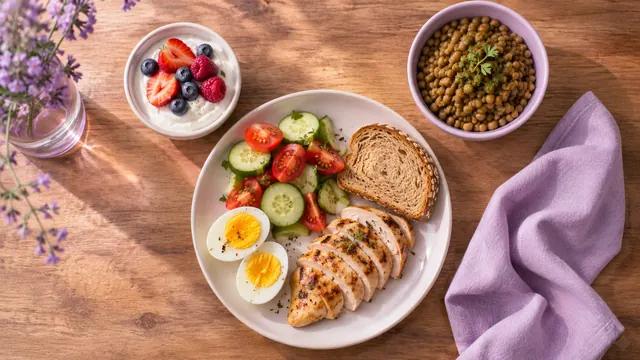 How much protein do I need?Vegetarian and vegan protein, per meal
 20 fitness and diet myths vs factsIncluding the supplement ones
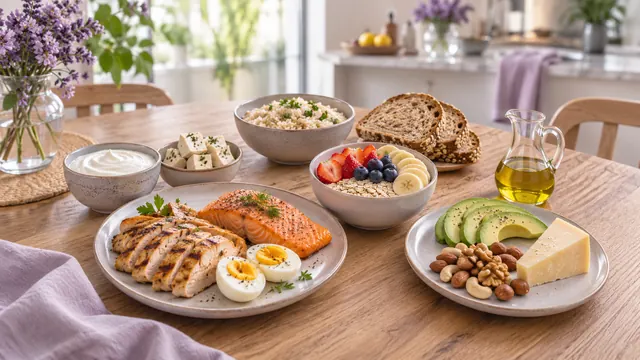 Macros made simpleProtein, carbs and fat on one plate
Sources
- NIH Office of Dietary Supplements. Vitamin B12: Fact Sheet for Health Professionals. ods.od.nih.gov
- Pawlak R, Parrott SJ, Raj S, Cullum-Dugan D, Lucus D. How prevalent is vitamin B12 deficiency among vegetarians? Nutrition Reviews 2013;71(2):110–117. PubMed
- Watanabe F, Katsura H, Takenaka S, et al. Pseudovitamin B12 is the predominant cobamide of an algal health food, spirulina tablets. Journal of Agricultural and Food Chemistry 1999;47(11):4736–4741. PubMed
- Watanabe F, Yabuta Y, Bito T, Teng F. Vitamin B12-containing plant food sources for vegetarians. Nutrients 2014;6(5):1861–1873. PubMed
- The Vegan Society. What every vegan should know about vitamin B12. vegansociety.com
- U.S. Department of Agriculture, Agricultural Research Service. FoodData Central. fdc.nal.usda.gov
This article is general information for healthy adults, not medical advice. If you have a medical condition, are pregnant, or take medication, talk to a doctor or registered dietitian before changing your diet, sleep or training.