
Nutrition · Protein
High-protein foods: 60 foods ranked
Key takeaways
- 31 gprotein per 100 g of roasted chicken breast, the top everyday whole foodUSDA FoodData Central
- 0.8 g/kga day is the minimum; 1.6–2.2 g/kg supports building muscleMorton et al., BJSM 2018
- Soy ≈ animalin protein quality; most other plant proteins score lowerFAO protein quality report, 2013
- 20–30%of protein's calories are spent digesting it, the most of any macroWesterterp, Nutr Metab 2004
DefinitionProtein density is how much protein a food gives for its weight or its calories, usually written as grams per 100 g or per 100 kcal.
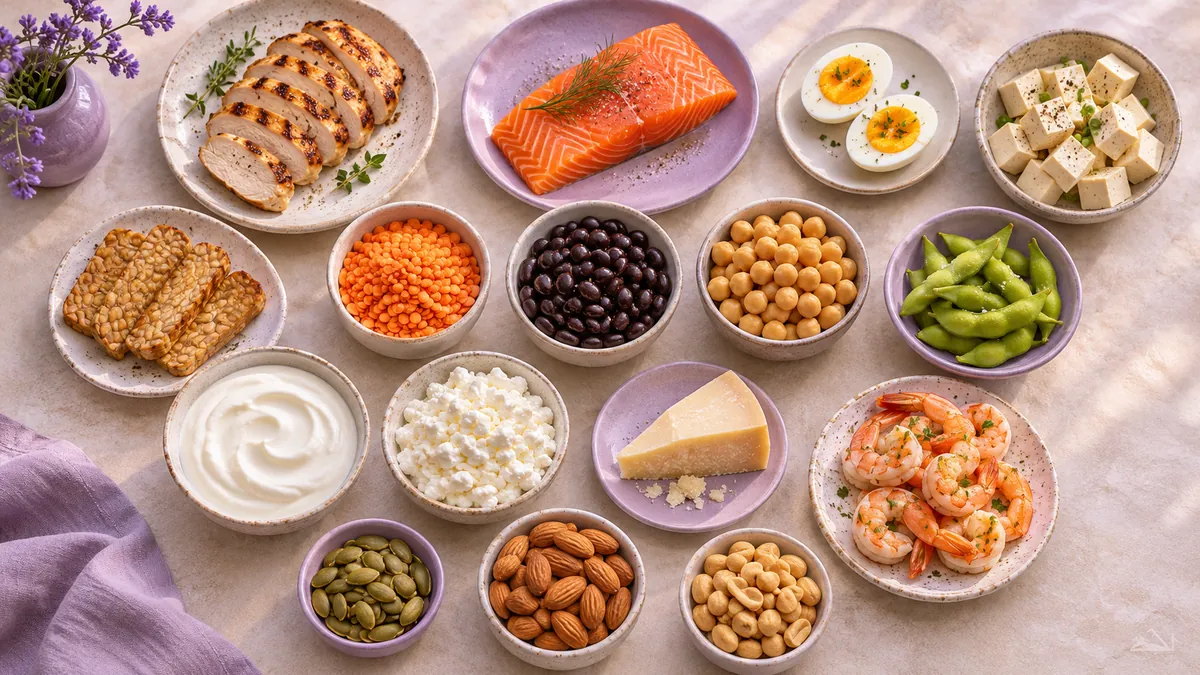
This list ranks 60 common high-protein foods from every food group three ways: per 100 g, per 100 kcal and per typical serving. Per 100 g tells you which foods are dense in protein; per 100 kcal tells you which give the most protein for the fewest calories, which matters when you are losing weight. Every food links to its full nutrition page. To find your daily target, see how much protein do I need.
Which foods have the most protein?
Per 100 g, the top whole foods are Parmesan, hemp seeds, chicken breast, pumpkin seeds and turkey breast, all with 30 g or more. Protein powders are higher still, at 75–90 g. Per calorie, lean fish and seafood, egg whites and turkey or chicken breast win, because they carry very little fat.
| Top 10 per 100 g (whole foods) | Top 10 per 100 kcal (whole foods) |
|---|---|
|
|
How much protein is in my portion?
Multiply the grams you eat by the food's protein per 100 g, then divide by 100. For example, 150 g of roasted chicken breast gives about 47 g of protein and 248 kcal. Pick any of the 60 foods below and type the grams you actually eat; weigh food raw or cooked to match the label shown.
Protein per serving converter
Example: 150 g cooked chicken breast = about 47 g protein and 248 kcal.
Should I compare protein per 100 g or per 100 kcal?
Use both. Protein per 100 g shows how much protein a food packs by weight, which helps when choosing portions. Protein per 100 kcal shows how much you get for your calorie budget: 100 kcal of shrimp gives about 24 g of protein, while 100 kcal of peanuts gives about 4 g. For fat loss, per 100 kcal matters most.
Nuts and seeds look superb per 100 g, but a 100 g portion is 550–600 kcal, so a realistic handful (30 g) gives 6–9 g of protein. Lean fish, poultry, egg whites and strained dairy are the opposite: modest per 100 g, but very high per calorie. Beans and lentils sit in between and add fibre that keeps you full.
Which meats and poultry are highest in protein?
Roasted chicken breast (31 g per 100 g) and turkey breast (30 g) lead, followed by roasted goat meat (27 g) and a cooked lean beef patty (26 g). Lean cuts give the most protein per calorie: chicken breast, turkey breast and goat meat all supply around 19–21 g of protein per 100 kcal.
| Food | Protein / 100 g | kcal / 100 g | Protein / 100 kcal | Protein / serving | Serving |
|---|---|---|---|---|---|
| Chicken breast, roasted | 31 g | 165 | 18.8 g | 37 g | 1 palm-sized portion (120 g) |
| Turkey breast, roasted | 30.1 g | 147 | 20.5 g | 36 g | 1 portion (120 g) |
| Goat meat, roasted | 27.1 g | 143 | 19.0 g | 33 g | 1 portion (120 g) |
| Beef patty 85% lean, cooked | 25.9 g | 250 | 10.4 g | 26 g | 1 patty (100 g) |
| Chicken thigh, roasted | 24.8 g | 179 | 13.9 g | 25 g | 1 large thigh, meat only (100 g) |
| Chicken drumstick, braised | 23.9 g | 156 | 15.3 g | 18 g | 1 drumstick, meat only (75 g) |
| Beef eye of round, lean (raw) | 23.4 g | 116 | 20.2 g | 28 g | 1 portion, raw weight (120 g) |
| Ham, roasted | 22 g | 165 | 13.3 g | 13 g | 2 slices (60 g) |
| Pork tenderloin (raw) | 20.9 g | 109 | 19.2 g | 25 g | 1 portion, raw weight (120 g) |
| Beef liver (raw) | 20.4 g | 135 | 15.1 g | 20 g | 1 portion, raw weight (100 g) |
Processed meats such as ham, bacon and salami are protein-rich but high in salt, and the WHO classifies processed meat as a cause of bowel cancer, so keep them occasional. Fresh poultry, fish, eggs and legumes are better daily staples.
Which fish and seafood are highest in protein?
Tuna, salmon, anchovies, shrimp, tilapia and trout all give about 20–24 g of protein per 100 g raw, and more once cooked. Shrimp, cod, tilapia, canned light tuna and tuna steak are among the best protein sources per calorie of any food. Oily fish such as salmon and mackerel also add omega-3 fats and vitamin D.
| Food | Protein / 100 g | kcal / 100 g | Protein / 100 kcal | Protein / serving | Serving |
|---|---|---|---|---|---|
| Yellowfin tuna (raw) | 24.4 g | 109 | 22.4 g | 29 g | 1 steak, raw weight (120 g) |
| Salmon, Atlantic, farmed (raw) | 20.4 g | 208 | 9.8 g | 24 g | 1 fillet, raw weight (120 g) |
| Anchovies (raw) | 20.4 g | 131 | 15.6 g | 10 g | a small handful (50 g) |
| Shrimp (raw) | 20.1 g | 85 | 23.6 g | 20 g | about 10 large (100 g) |
| Tilapia | 20.1 g | 96 | 20.9 g | 24 g | 1 fillet (120 g) |
| Rainbow trout, farmed (raw) | 19.9 g | 141 | 14.1 g | 24 g | 1 fillet, raw weight (120 g) |
| Salmon, Atlantic, wild (raw) | 19.8 g | 142 | 13.9 g | 24 g | 1 fillet, raw weight (120 g) |
| Canned light tuna in water, drained | 19 g | 90 | 21.1 g | 23 g | 1 can, drained (120 g) |
| Atlantic mackerel (raw) | 18.6 g | 205 | 9.1 g | 19 g | 1 small fillet, raw weight (100 g) |
| Cod (raw) | 17.8 g | 82 | 21.7 g | 21 g | 1 fillet, raw weight (120 g) |
| Squid (raw) | 15.6 g | 92 | 17.0 g | 16 g | 1 portion (100 g) |
| Mussels (raw) | 11.9 g | 86 | 13.8 g | 12 g | meat from about 20 mussels (100 g) |
How much protein is in eggs and dairy?
One large boiled egg has about 6–7 g of protein, and an egg white about 3.5 g. A 170 g pot of nonfat Greek yogurt gives about 17–18 g, a small tub of cottage cheese about 21 g, and a 250 ml glass of milk about 8–9 g. Hard cheeses are dense in protein but high in fat and salt.
| Food | Protein / 100 g | kcal / 100 g | Protein / 100 kcal | Protein / serving | Serving |
|---|---|---|---|---|---|
| Whey protein isolate, powder | 90 g | 370 | 24.3 g | 27 g | 1 scoop (30 g) |
| Whey protein concentrate, powder | 75 g | 340 | 22.1 g | 22 g | 1 scoop (30 g) |
| Parmesan cheese | 35.8 g | 392 | 9.1 g | 7 g | 2 tablespoons grated (20 g) |
| Cheddar cheese | 23.3 g | 408 | 5.7 g | 7 g | 1 matchbox-sized piece (30 g) |
| Mozzarella, whole milk | 22.2 g | 299 | 7.4 g | 7 g | 1 slice (30 g) |
| Paneer | 18.3 g | 265 | 6.9 g | 18 g | 1 portion (100 g) |
| Whole egg, boiled | 13 g | 155 | 8.4 g | 6 g | 1 large egg, shelled (50 g) |
| Egg white | 11 g | 52 | 21.2 g | 4 g | 1 large egg white (33 g) |
| Cottage cheese, 2% fat | 10.4 g | 81 | 12.8 g | 21 g | 1 small tub (200 g) |
| Greek yogurt, nonfat | 10.3 g | 61 | 16.9 g | 18 g | 1 pot (170 g) |
| Quark, 1% fat | 10 g | 66 | 15.2 g | 15 g | 1/2 tub (150 g) |
| Skim milk | 3.4 g | 34 | 10.0 g | 8 g | 1 glass (250 ml) (250 g) |
What are the best high-protein plant foods?
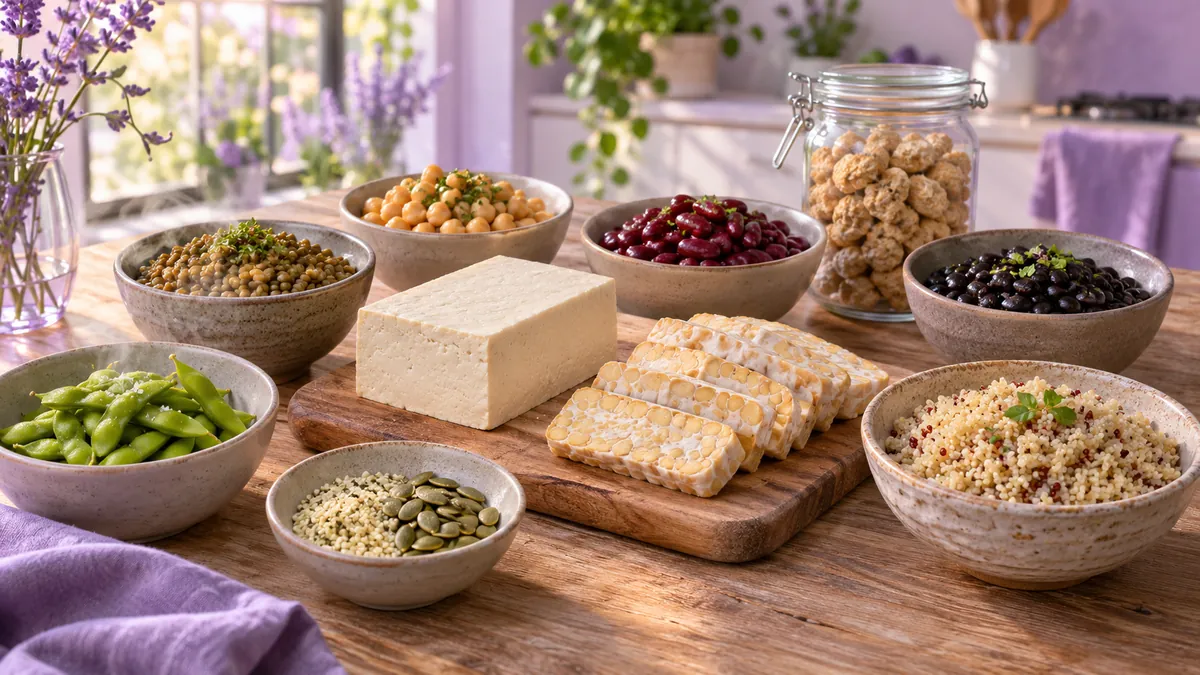
Soy foods lead: tempeh has about 20 g of protein per 100 g, cooked soya chunks 17 g and cooked soybeans 17 g. Cooked lupins give about 16 g, and lentils, chickpeas and beans about 8–9 g. Soy protein quality is close to animal protein; other legumes score lower alone but complement grains well.
| Food | Protein / 100 g | kcal / 100 g | Protein / 100 kcal | Protein / serving | Serving |
|---|---|---|---|---|---|
| Soy protein isolate, powder | 88.3 g | 335 | 26.4 g | 26 g | 1 scoop (30 g) |
| Tempeh | 20.3 g | 192 | 10.6 g | 20 g | 1/2 block (100 g) |
| Soya chunks (TVP), cooked | 17.3 g | 112 | 15.4 g | 26 g | 1 bowl (150 g) |
| Soybeans, cooked | 16.6 g | 173 | 9.6 g | 25 g | 3/4 cup (150 g) |
| Lupin beans, cooked | 15.6 g | 119 | 13.1 g | 16 g | 1/2 cup (100 g) |
| Edamame (raw weight) | 12.9 g | 147 | 8.8 g | 13 g | 1 bowl, shelled (100 g) |
| Lentils, cooked | 9 g | 116 | 7.8 g | 14 g | 3/4 cup (150 g) |
| Pinto beans, cooked | 9 g | 143 | 6.3 g | 14 g | 3/4 cup (150 g) |
| Chickpeas, cooked | 8.9 g | 164 | 5.4 g | 13 g | 3/4 cup (150 g) |
| Black beans, cooked | 8.9 g | 132 | 6.7 g | 13 g | 3/4 cup (150 g) |
| Red kidney beans, cooked | 8.7 g | 127 | 6.9 g | 13 g | 3/4 cup (150 g) |
| Split peas, cooked | 8.3 g | 118 | 7.0 g | 12 g | 3/4 cup (150 g) |
| Tofu | 8.1 g | 76 | 10.7 g | 12 g | 1/2 block (150 g) |
| Hummus | 7.8 g | 237 | 3.3 g | 5 g | 4 tablespoons (60 g) |
Protein quality is measured by how well a protein's amino acids match your needs and how much you digest. The FAO's preferred score, DIAAS, rates milk, eggs and meat highest, soy close behind, and most beans, grains and nuts lower, usually because one essential amino acid is short (lysine in grains, methionine in legumes). Eating a mix of beans, lentils, grains, nuts and soy over the day covers the gaps, and vegetarians and vegans can simply aim for the top of their protein range.
How much protein is in grains, nuts and seeds?
Hemp and pumpkin seeds have about 30 g of protein per 100 g, peanuts about 24 g and almonds about 21 g. But a typical 30 g handful gives only 6–9 g, with 165–180 kcal. Grains add smaller amounts: two slices of whole wheat bread give about 5 g and 150 g of cooked quinoa about 7 g.
| Food | Protein / 100 g | kcal / 100 g | Protein / 100 kcal | Protein / serving | Serving |
|---|---|---|---|---|---|
| Hemp seeds, hulled | 31.6 g | 553 | 5.7 g | 9 g | 3 tablespoons (30 g) |
| Pumpkin seeds | 30.2 g | 559 | 5.4 g | 9 g | a small handful (30 g) |
| Peanuts, roasted | 23.7 g | 585 | 4.1 g | 7 g | a small handful (30 g) |
| Peanut butter | 22.2 g | 598 | 3.7 g | 7 g | 2 tablespoons (32 g) |
| Almonds | 21.2 g | 579 | 3.7 g | 6 g | about 23 almonds (30 g) |
| Sunflower seeds | 20.8 g | 584 | 3.6 g | 6 g | a small handful (30 g) |
| Pistachios, shelled | 20.2 g | 560 | 3.6 g | 6 g | about 49 kernels (30 g) |
| Oats (dry) | 16.9 g | 389 | 4.3 g | 7 g | 1/2 cup dry (40 g) |
| Chia seeds | 16.5 g | 486 | 3.4 g | 2 g | 1 tablespoon (15 g) |
| Whole wheat bread | 9 g | 247 | 3.6 g | 5 g | 2 slices (60 g) |
| Pasta, cooked | 5.8 g | 158 | 3.7 g | 12 g | 1 plate (200 g) |
| Quinoa, cooked | 4.4 g | 120 | 3.7 g | 7 g | 3/4 cup (150 g) |
Which high-protein foods are low in calories?
Lean fish and seafood, egg whites, nonfat Greek yogurt, chicken and turkey breast, and lean red meat give the most protein per calorie, roughly 17–24 g per 100 kcal. Among plant foods, cooked soya chunks give about 15 g per 100 kcal and lupins about 13 g, far more than nuts or hummus.
| Food | Protein / 100 kcal | kcal / 100 g |
|---|---|---|
| Shrimp (raw) | 23.6 g | 85 |
| Yellowfin tuna (raw) | 22.4 g | 109 |
| Cod (raw) | 21.7 g | 82 |
| Egg white | 21.2 g | 52 |
| Canned light tuna in water, drained | 21.1 g | 90 |
| Tilapia | 20.9 g | 96 |
| Turkey breast, roasted | 20.5 g | 147 |
| Beef eye of round, lean (raw) | 20.2 g | 116 |
| Pork tenderloin (raw) | 19.2 g | 109 |
| Goat meat, roasted | 19.0 g | 143 |
| Chicken breast, roasted | 18.8 g | 165 |
| Squid (raw) | 17.0 g | 92 |
Protein also helps in a calorie deficit in another way: your body spends about 20–30% of protein's calories digesting it, compared with about 5–10% for carbohydrate and 0–3% for fat. To set your calories for weight loss, use the calorie deficit calculator.

How much protein do I need, and how should I spread it?
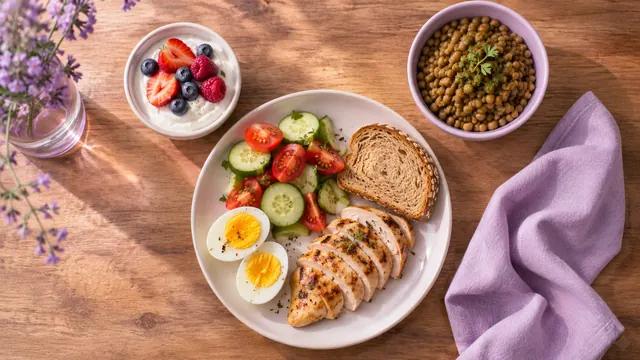
The adult minimum (RDA) is 0.8 g per kg of bodyweight a day. If you lift weights or want to keep muscle while losing fat, aim for about 1.6–2.2 g/kg, which is 110–155 g for a 70 kg person. Split it into 3–4 meals of about 25–40 g so each meal fully triggers muscle building.
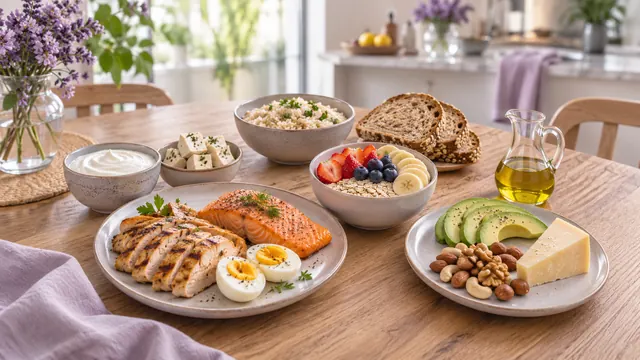
A day that hits 120 g could be: Greek yogurt with hemp seeds at breakfast (about 27 g), a chicken or tempeh rice bowl at lunch (about 40 g), a glass of milk and a handful of pumpkin seeds as a snack (about 17 g), and lentils with fish or tofu at dinner (about 40 g). Work out your own number with the protein calculator, and see how protein fits with carbs and fat in macros made simple.
The bottom line
Lean poultry, fish, egg whites, Greek yogurt and soy foods give the most protein for the fewest calories; seeds, nuts and hard cheese are dense in protein but also in calories. Aim for 1.6–2.2 g of protein per kg a day if you train, split into 3–4 meals, and mix plant sources over the day if you eat little or no meat.
Frequently asked questions
What food has the highest protein per 100 g?
Among whole foods, Parmesan cheese (about 36 g), hemp seeds (32 g), roasted chicken breast (31 g), pumpkin seeds (30 g) and roasted turkey breast (30 g). Protein powders are higher still: whey and soy isolates have about 88–90 g per 100 g.
What are the best high-protein foods for vegetarians?
Greek yogurt, cottage cheese, eggs, paneer and cheese for lacto-ovo vegetarians; and for everyone, tempeh, tofu, soya chunks, edamame, lupins, lentils, chickpeas, beans, hemp and pumpkin seeds. Mixing legumes with grains over the day covers all essential amino acids.
Which high-protein foods are low in calories?
Shrimp, white fish such as cod and tilapia, canned light tuna, egg whites, nonfat Greek yogurt, chicken and turkey breast. Each gives about 17–24 g of protein per 100 kcal. Plant picks include cooked soya chunks and lupin beans.
Is peanut butter a good source of protein?
It is a moderate one. Peanut butter has about 22 g of protein per 100 g, but two tablespoons (32 g) give about 7 g of protein with nearly 200 kcal, mostly from fat. It is a good food, but not an efficient way to raise protein on a calorie budget.
How much protein is in an egg?
A large boiled egg (about 50 g without the shell) has about 6–7 g of protein, roughly 3.5 g in the white and the rest in the yolk. Three eggs give about 20 g.
Do I need protein powder?
No. Powder is a convenient way to top up protein, but whole foods like eggs, dairy, fish, poultry, tofu and legumes can cover your needs and add fibre, iron, zinc and other nutrients. Use powder if it helps you hit your target.
Are plant proteins complete?
Soy, quinoa and some others contain all essential amino acids in useful amounts. Most beans, lentils, grains and nuts are short in one, but eating a variety across the day, such as lentils with rice or hummus with bread, gives you a complete mix.
Keep reading
 How much protein do I need?Grams per kg by goal, with a calculator
 Macros made simpleSplit your calories into protein, carbs and fat
 How many calories should I eat?TDEE, deficits and surpluses explained
 Vitamins and mineralsWhat each one does and where to get it
Sources
- U.S. Department of Agriculture, Agricultural Research Service. FoodData Central (SR Legacy and Foundation Foods). fdc.nal.usda.gov
- Morton RW et al. A systematic review, meta-analysis and meta-regression of the effect of protein supplementation on resistance training-induced gains in muscle mass and strength in healthy adults. British Journal of Sports Medicine 2018;52:376–384. PubMed
- Food and Agriculture Organization of the United Nations. Dietary protein quality evaluation in human nutrition: report of an FAO expert consultation. FAO Food and Nutrition Paper 92. Rome: FAO, 2013. fao.org
- Westerterp KR. Diet induced thermogenesis. Nutrition & Metabolism 2004;1:5. PubMed
- Schoenfeld BJ, Aragon AA. How much protein can the body use in a single meal for muscle-building? Implications for daily protein distribution. Journal of the International Society of Sports Nutrition 2018;15:10. PubMed
- International Agency for Research on Cancer. Carcinogenicity of the consumption of red meat and processed meat. The Lancet Oncology 2015;16(16):1599–1600. PubMed
This article is general information for healthy adults, not medical advice. If you have a medical condition, are pregnant, or take medication, talk to a doctor or registered dietitian before changing your diet, sleep or training.