Free tool · Protein
Protein calculator
Your daily protein
Example: 70 kg, build muscle, 4 meals: 112–154 g a day, 28–39 g per meal.
How it works
Protein a day = body weight (kg) × g/kg for your goal (lb × g/lb)
Per meal = daily grams ÷ meals; aim for about 0.4 g/kg (25–40 g) each
Calories = grams × 4
| Goal | g per kg | g per lb |
|---|---|---|
| Not training (minimum, WHO/RDA) | 0.8–1.0 | 0.36–0.45 |
| Training 1–3× a week | 1.2–1.6 | 0.55–0.7 |
| Building muscle | 1.6–2.2 | 0.7–1.0 |
| Losing fat while lifting | 1.8–2.4 | 0.8–1.1 |
| Over 60 and active | 1.2–1.6 | 0.55–0.7 |
Muscle gains plateau around 1.6 g/kg on average; 2.2 g/kg covers people who respond to more (Morton 2018). If you carry a lot of extra weight, use a realistic goal weight instead of your current weight.
Safety
Frequently asked questions
How much protein do I need a day?
Adults who don't train need at least 0.8 g per kg of body weight. If you lift weights, aim for 1.6–2.2 g/kg, and 1.8–2.4 g/kg while losing fat. For a 70 kg person who trains that is about 110–155 g.
How much protein per meal?
About 0.4 g per kg per meal, or 25–40 g for most adults, spread over 3–5 meals. The muscle-building response per meal levels off around 0.4–0.55 g/kg.
Should I use my current or goal weight?
Use current weight if you are lean or average. With a lot of extra body fat, use a realistic goal weight, or the result will be higher than needed.
Is too much protein bad for your kidneys?
Not for healthy kidneys: studies up to 2–3 g/kg found no harm. People with kidney disease should follow their doctor's limit.
Do I need protein powder?
No. Eggs, dairy, fish, meat, tofu, lentils and beans can cover it. Powder is a convenient top-up.
Keep reading
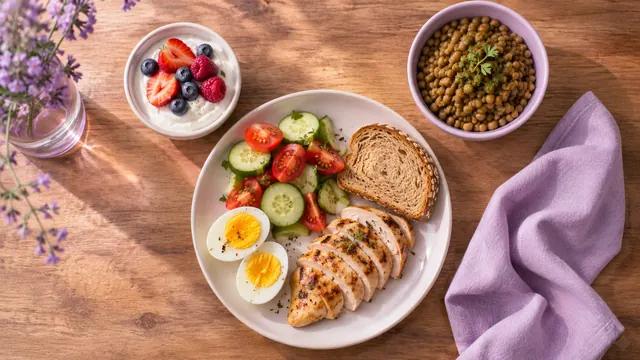 How much protein do I need?Grams per kg by goal, foods and a sample day
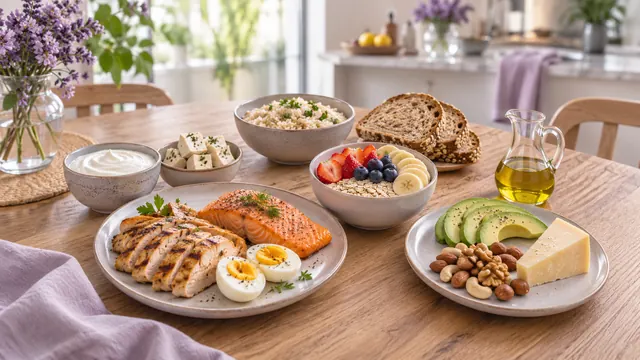 Macros made simpleFit protein in with carbs and fat
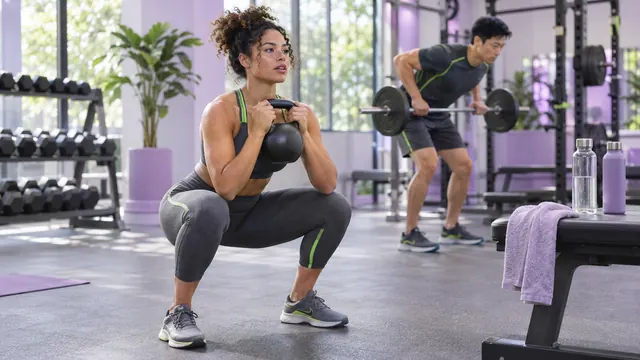 Beginner 3-day workout splitThe training that makes protein count
More free calculators
- TDEE calculator
- Calorie deficit calculator
- Macro calculator
- BMI calculator
- Body fat calculator
- Water intake calculator
- One rep max calculator
Sources
- Jäger R et al. International Society of Sports Nutrition position stand: protein and exercise. Journal of the International Society of Sports Nutrition 2017;14:20. PubMed
- Morton RW et al. A systematic review, meta-analysis and meta-regression of the effect of protein supplementation on resistance training-induced gains in muscle mass and strength in healthy adults. British Journal of Sports Medicine 2018;52:376–384. PubMed
- Schoenfeld BJ, Aragon AA. How much protein can the body use in a single meal for muscle-building? Journal of the International Society of Sports Nutrition 2018;15:10. PubMed
- Helms ER, Zinn C, Rowlands DS, Brown SR. A systematic review of dietary protein during caloric restriction in resistance trained lean athletes. International Journal of Sport Nutrition and Exercise Metabolism 2014;24(2):127–138. PubMed
- Bauer J et al. Evidence-based recommendations for optimal dietary protein intake in older people: a position paper from the PROT-AGE Study Group. JAMDA 2013;14(8):542–559. PubMed
- WHO/FAO/UNU. Protein and amino acid requirements in human nutrition. WHO Technical Report Series 935, 2007. who.int
- National Academies of Sciences, Engineering, and Medicine. Dietary Reference Intakes for Energy, Carbohydrate, Fiber, Fat, Fatty Acids, Cholesterol, Protein, and Amino Acids (2005). nap.nationalacademies.org
Estimates for healthy adults, not medical advice. If you are under 18, pregnant or breastfeeding, have a medical condition or take medication, ask a doctor or registered dietitian before changing how you eat.