
Free tool · Macros
Macro calculator
Your daily macros
Example: 70 kg, 2,100 kcal, lose fat, 1.6 g/kg protein, fat 28%: 112 g protein, 267 g carbs, 65 g fat, 29 g+ fibre.
How it works
Protein (g) = body weight (kg) × 1.0–2.2
Fat (g) = calories × fat % ÷ 9 (25% build muscle, 28% lose fat, 30% maintain)
Carbs (g) = (calories − protein × 4 − fat × 9) ÷ 4
Fibre (g) = 14 per 1,000 kcal, at least 25
Healthy ranges for adults (US National Academies): protein 10–35%, fat 20–35% and carbs 45–65% of calories. WHO advises keeping saturated fat under 10% of calories and free sugars under 10%. Fibre follows the 14 g per 1,000 kcal adequate intake.
Safety
Frequently asked questions
What is the best macro ratio for weight loss?
There is no single best ratio: weight loss depends on the calorie deficit. Keep protein high (1.6–2.2 g/kg), fat around 25–30% of calories, and let carbs fill the rest.
How do I calculate my macros?
Start from your daily calories. Protein = body weight in kg × 1.6 (if you lift). Fat = calories × 0.28 ÷ 9. Carbs = what's left ÷ 4. Example: 70 kg on 2,100 kcal gives 112 g protein, 65 g fat and 267 g carbs.
How many calories are in a gram of protein, carbs and fat?
Protein and carbohydrate have about 4 kcal per gram, fat about 9 kcal per gram and alcohol about 7 kcal per gram.
Do I need to hit my macros exactly?
No. Within about 10 g of protein and a few hundred calories over a week is fine. Calories and protein matter most.
How much fibre should I eat?
About 14 g per 1,000 kcal, so 25–38 g a day for most adults, from vegetables, fruit, whole grains, beans and lentils.
Keep reading
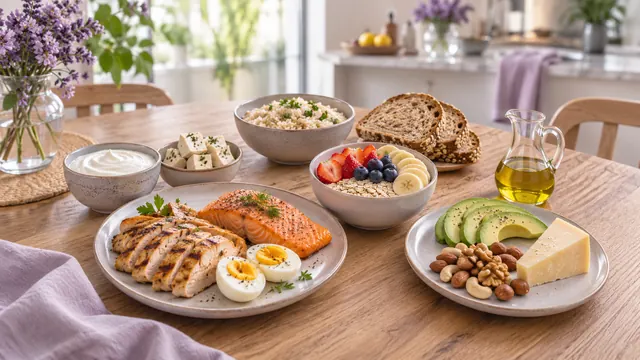 Macros made simpleProtein, carbs and fat explained, with food examples
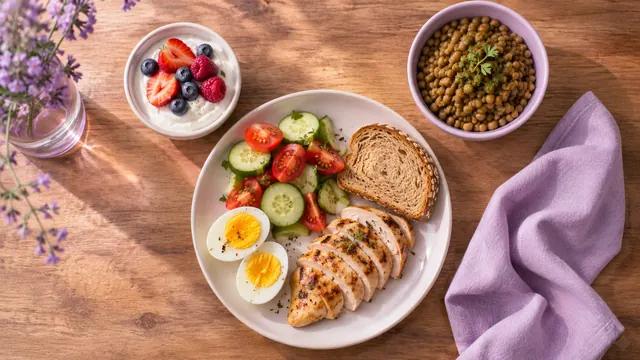 How much protein do I need?Grams per kg by goal
 How many calories should I eat?TDEE, deficits and surpluses
More free calculators
- TDEE calculator
- Calorie deficit calculator
- Protein calculator
- BMI calculator
- Body fat calculator
- Water intake calculator
- One rep max calculator
Sources
- National Academies of Sciences, Engineering, and Medicine. Dietary Reference Intakes for Energy, Carbohydrate, Fiber, Fat, Fatty Acids, Cholesterol, Protein, and Amino Acids (2005). nap.nationalacademies.org
- World Health Organization. Healthy diet (fact sheet). who.int
- Jäger R et al. International Society of Sports Nutrition position stand: protein and exercise. Journal of the International Society of Sports Nutrition 2017;14:20. PubMed
- Aragon AA et al. International Society of Sports Nutrition position stand: diets and body composition. Journal of the International Society of Sports Nutrition 2017;14:16. PubMed
- Reynolds A et al. Carbohydrate quality and human health: a series of systematic reviews and meta-analyses. The Lancet 2019;393(10170):434–445. PubMed
- Morton RW et al. A systematic review, meta-analysis and meta-regression of the effect of protein supplementation on resistance training-induced gains in muscle mass and strength in healthy adults. British Journal of Sports Medicine 2018;52:376–384. PubMed
Estimates for healthy adults, not medical advice. If you are under 18, pregnant or breastfeeding, have a medical condition or take medication, ask a doctor or registered dietitian before changing how you eat.